
Subsurface Drip Irrigation Planning: What to Consider Before Installation
Subsurface Drip Irrigation Planning: What to Consider Before Installation
Water scarcity is a growing concern for growers across the globe, making efficient irrigation methods more critical than ever. Traditional flood or sprinkler systems, while familiar, often lose significant amounts of water to evaporation and runoff. This is where Subsurface Drip Irrigation (SDI) steps in as a transformative solution for modern agriculture.
SDI involves burying drip tape or tubes below the soil surface, delivering water directly to the crop’s root zone. This method drastically reduces evaporation, minimizes weed growth by keeping the surface dry, and improves nutrient uptake. It’s a precise way to farm, ensuring that every drop counts.
However, moving to an SDI system is a significant investment that requires careful planning. It isn’t a “set it and forget it” solution; it demands a strategic approach to design, installation, and maintenance. At Western Irrigation, we specialize in guiding growers through this transition, ensuring that the advanced irrigation solutions we implement are perfectly suited to the unique demands of your land.
Understanding Your Water Quality
The first and arguably most critical step in planning an SDI system is analyzing your water source. Because the emitters are buried underground, detecting clogs visually is impossible until crop stress becomes visible. Therefore, preventing clogs before they happen is paramount.
Common Contaminants
Different water sources—whether well water, surface water, or reclaimed water—carry different risks.
- Physical particles: Sand, silt, and algae can physically block narrow drip emitters.
- Chemical precipitants: High levels of calcium or magnesium can lead to scale buildup, while iron and manganese can precipitate and form sludge that clogs lines.
- Biological growth: Bacteria and slime can thrive inside the tubes, creating bio-films that restrict flow.
Filtration Solutions
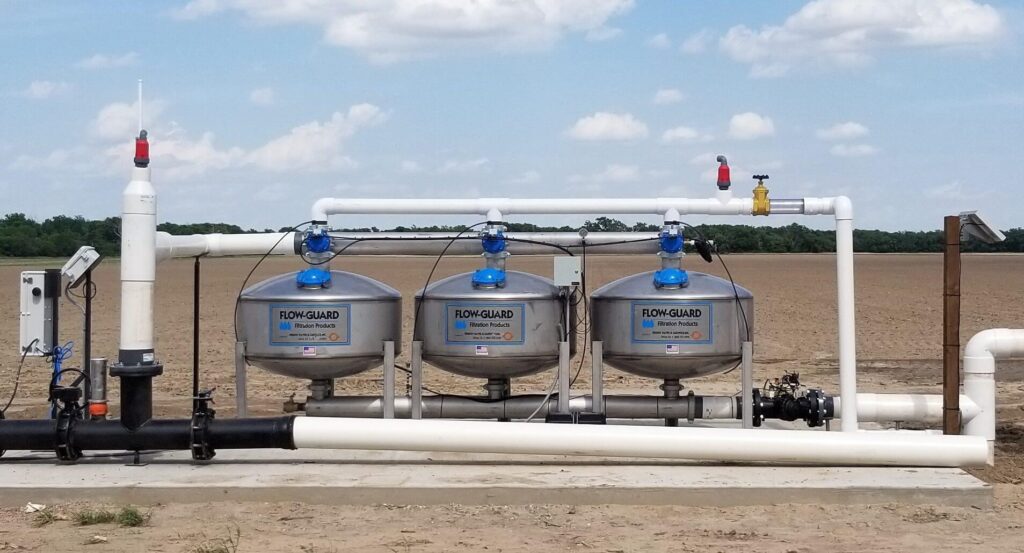
Western Irrigation places a heavy emphasis on water testing during the planning phase. By understanding the specific chemistry and particulate load of your water, we can recommend the appropriate filtration system—be it sand media filters, disc filters, or screen filters. Effective filtration is the heart of an SDI system; without it, even the most expensive setup will fail.
Evaluating Soil Composition and Field Conditions
Water moves differently through different soil types, which directly influences how you should design your SDI system.
Why Soil Type Matters
- Sandy Soil: Water tends to move vertically rather than laterally. This means drip lines need to be spaced closer together to ensure a continuous wetting pattern along the crop row.
- Clay Soil: Water moves laterally very well but drains slowly. Emitters can be spaced further apart, but application rates must be lower to prevent waterlogging or surfacing.
Topography and Slope
The lay of the land also dictates system design. Significant slopes can cause pressure differences, leading to uneven watering where low points get too much water and high points get too little. Pressure-compensating (PC) emitters are often necessary in these terrains to ensure uniform flow rates across the entire field.
Our team at Western Irrigation conducts thorough soil analysis and topographic surveys. We use this data to determine the optimal depth for drip tape placement and the correct spacing for emitters, ensuring your crop gets uniform moisture regardless of field variability.
Designing the Right System for Your Needs
There is no “one size fits all” in subsurface irrigation. The system must be tailored to the specific crop, field dimensions, and operational goals.
Key Components
An effective SDI system comprises several critical components working in unison:
- Drip Tape/Tubing: The conduit for water delivery. Wall thickness and emitter spacing are chosen based on crop longevity (single season vs. permanent crop) and soil type.
- Pumping Station: Must provide adequate pressure and flow to the furthest reaches of the field.
- Controllers: The brain of the operation. Modern controllers allow for automated scheduling, often integrated with soil moisture sensors for precision irrigation.
- Air Vents and Flush Valves: Essential for system health, allowing air to escape during startup and debris to be flushed out during maintenance.
Customization Factors
Are you growing a permanent crop like almonds or vineyards, or rotating row crops like cotton and tomatoes? Permanent crops require heavy-duty, long-lasting tubing buried deeper, while row crops might use thinner tape closer to the surface. Western Irrigation’s design team factors in crop root depth, row spacing, and future rotation plans to engineer a system that remains versatile and effective for years.
Planning for Maintenance and Longevity
One of the biggest misconceptions about SDI is that it maintenance-free. In reality, because the hardware is buried, proactive maintenance is vital.
Routine Flushing
Regular flushing of the lines helps push out any sediment or biological buildup that escapes the filters. A well-designed system will have flush valves at the ends of the driplines or manifolds to make this process easy.
System Monitoring
Monitoring flow meters and pressure gauges is the best way to “see” what is happening underground. A sudden drop in pressure might indicate a leak (perhaps from rodent damage), while a gradual increase in pressure could signal clogging emitters.
We offer comprehensive maintenance support and service plans to help growers stay on top of these tasks. From winterization protocols to chemical injection strategies for cleaning lines, Western Irrigation partners with you to maximize the lifespan of your investment.
Budgeting and ROI: Is SDI Worth It?
The upfront cost of SDI is generally higher than flood or furrow irrigation and can be comparable to or higher than center pivots, depending on the complexity. However, the Return on Investment (ROI) often tells a compelling story.
Long-Term Savings
- Water Efficiency: SDI improves water efficiency by reducing evaporation and runoff, achieving water savings of 25-50% compared to traditional flood irrigation methods—an essential factor in areas with water scarcity.
- Fertilizer Efficiency: Through fertigation, nutrients are delivered directly into the irrigation water, reaching the crop roots efficiently. This reduces fertilizer waste, optimizes nutrient uptake, and lowers overall fertilizer costs.
- Labor Reduction: Automated SDI systems minimize the need for manual labor by eliminating tasks like moving pipes or managing flood gates. This saves time and decreases labor costs significantly for growers.
- Yield Increases: By maintaining consistent soil moisture levels, SDI supports improved crop uniformity and higher yields. Healthier plants often result in more profitable harvests, making SDI a worthwhile investment.
While the initial check is larger, the operational savings and yield improvements typically pay for the system within a few growing seasons.
Installation Best Practices
A flawless design can be ruined by poor installation. Precision is key when burying lines to ensure they are at a uniform depth and spacing.
The Process
- Field Preparation: The soil must be carefully tilled and cleared of large rocks, roots, or debris. This ensures a smooth installation process and prevents potential damage to the drip tape during operation.
- GPS Guidance: Using advanced GPS technology, drip lines are installed precisely along planned crop rows. This alignment reduces inefficiencies, maximizes water delivery, and ensures optimal resource distribution across the field.
- Connection and Testing: After laying the drip tape, manifolds and mainlines are connected. The system is pressure tested for leaks to verify functionality before carefully backfilling and covering the trenches
Common Mistakes
Avoiding shortcuts is crucial. Failing to install proper air relief valves can lead to vacuum suction that sucks soil into the emitters when the system shuts off—a recipe for instant clogging. Another common error is burying the tape too deep for seedlings to access moisture, or too shallow where tillage equipment might damage it. Western Irrigation’s experienced crews follow strict protocols to ensure a seamless installation that avoids these costly pitfalls.
Investing in the Future of Your Farm
Subsurface Drip Irrigation is a powerful tool for the modern grower, offering a path to higher yields and resource conservation. But success relies heavily on the details—understanding your water, soil, and crop needs, and executing a flawless design and installation.
Choosing the right partner makes all the difference. Western Irrigation brings decades of expertise to the table, helping you navigate the complexities of SDI planning. We don’t just sell parts; we design solutions that help your farm thrive for generations.
Ready to explore if SDI is right for your operation? Contact Western Irrigation today for a consultation or site assessment.