Subsurface Drip Irrigation for Corn Production: A Farmer’s Case Study
Subsurface Drip Irrigation for Corn Production: A Farmer’s Case Study
Water management has shifted from a routine farm task to a critical survival strategy. For corn producers, the stakes are exceptionally high. Corn is a thirsty crop, requiring significant moisture during critical growth stages to reach its yield potential. However, shifting weather patterns, shrinking aquifers, and stricter water allocations are squeezing farmers from every side.
The days of assuming “rain makes grain” are fading. Producers are now looking for technology that maximizes every drop pumped from the ground. While center pivots have been the standard for decades, a quiet revolution is taking place beneath the soil. Subsurface Drip Irrigation (SDI) is changing how we approach corn production, offering a lifeline to operations facing hydrological and economic pressure.
At Western Irrigation, we have seen firsthand how transitioning to SDI transforms farm operations. This post explores the mechanics of SDI, the current water crisis, and a specific case study of a producer who made the switch to secure their farm’s future.
The Water Crisis in Agriculture
The pressure on agricultural water sources is intensifying. Across major corn-producing regions, groundwater levels are declining. What was once an abundant resource is now a regulated commodity.
Traditional irrigation methods are struggling to keep up with these constraints. Flood irrigation, while simple, is notoriously inefficient, losing vast amounts of water to runoff and deep percolation. Center pivot systems, though an improvement, still face significant losses due to evaporation and wind drift, especially during the hot, windy days of July and August when corn needs water most.
Farmers are finding that their existing systems simply cannot deliver enough water to the root zone to prevent crop stress without exceeding their pumping limits. This efficiency gap has driven the industry toward more precise solutions.
What is Subsurface Drip Irrigation (SDI)?
Subsurface Drip Irrigation (SDI) is an advanced method of applying water directly to the crop’s root zone through buried plastic tubes, or drip tapes, containing embedded emitters. Unlike pivots that spray water from above, SDI works from the bottom up.
The system operates at low pressure, delivering water frequently in small amounts. This maintains a consistent soil moisture level, eliminating the “feast or famine” cycle often seen with other irrigation methods.
Key benefits for corn production include:
- Water Efficiency: SDI systems typically achieve 95% application efficiency. There is zero wind drift and negligible evaporation since the water never touches the surface.
- Fertilizer Efficiency: Through “fertigation,” nutrients can be injected directly into the irrigation water. This delivers fertilizer right to the roots, reducing runoff and volatilization.
- Dry Surface: Because the soil surface remains dry, weed germination is reduced, and field access is improved. Farmers can enter the field for spraying or harvesting even while irrigation is running.
The Farmer’s Challenge: A Case Study
Let’s look at a recent project Western Irrigation undertook with a corn producer in the high plains—we’ll call him Mark. Mark farms 1,500 acres and relies heavily on a local aquifer that has seen levels drop consistently over the last decade.
Mark faced a dual challenge. First, his pumping capacity had decreased; his wells could no longer supply the volume needed to run his high-pressure center pivots effectively during peak summer heat. Second, the shape of his fields included several irregular corners that the pivots couldn’t reach, leaving valuable acreage underutilized.
He was pumping maximum hours but seeing diminishing returns. The stress on the crop during pollination was evident, and his yields were plateauing while his energy bills for pumping skyrocketed. He realized that continuing with the status quo was a slow path to unprofitability. He needed a system that could utilize his limited water supply more effectively.
Transitioning to SDI: The Process
Mark contacted Western Irrigation to explore alternatives. The transition to SDI is an investment, both financially and operationally, and we guided him through every step.
The process began with a comprehensive site analysis. We mapped the topography and soil types of his fields to design a system that would maintain uniform pressure and flow rates. Design is critical in SDI; a poorly designed system cannot be easily fixed once buried.
Installation involved using GPS-guided tractors to inject the drip tape at a depth of 14 to 16 inches—deep enough to allow for tillage and cultivation but shallow enough for capillary action to wick water up to the germinating seeds.
We addressed Mark’s primary concerns early on:
- Upfront Cost: While the initial investment was higher than replacing a pivot, the long-term ROI based on input savings made the math work.
- Rodents: We installed a comprehensive pest management plan to protect the buried lines.
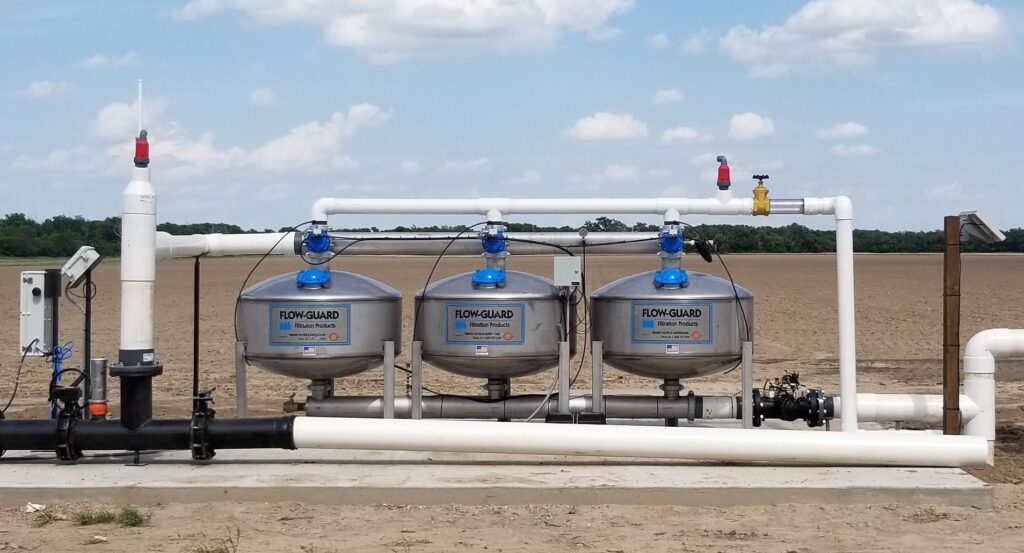
- Filtration: We designed a robust filtration station to prevent the emitters from clogging, a crucial component for system longevity.
Real-World Results: The Impact of SDI
The first harvest following the installation showed a stark contrast to previous years.
Water Usage
Mark reported a 25% reduction in water usage compared to his adjacent fields still under pivot irrigation. By eliminating evaporation and runoff, every gallon pumped contributed directly to plant growth.
Yield and Quality
Despite using less water, yields improved. The corn in the SDI field yielded 18% higher than his farm average. The consistency of the crop was notable; the plants were uniform in height and ear size from the edge of the field to the center, eliminating the “edge effect” common with pivots.
Financial Outcomes
The combination of lower energy costs (due to lower pressure requirements and less pumping time) and higher yields significantly improved his margins. Mark estimates the system will pay for itself within four to five years, all while securing his ability to farm with reduced water allocations.
Overcoming Challenges with SDI
Adopting SDI is not without its hurdles. It requires a different management mindset than overhead irrigation.
The biggest threat to an SDI system is typically rodents. Gophers and mice can chew through drip tape, causing underground leaks that are difficult to detect immediately. Mark had to implement a strict rodent control program.
Filtration maintenance is another non-negotiable. If the water isn’t filtered correctly, the emitters clog, and the system fails.
This is where partner support became vital. Western Irrigation provided Mark with training on how to monitor flow meters to detect leaks and established a maintenance schedule for the filtration units. Their ongoing troubleshooting support meant Mark wasn’t figuring out these new problems alone.
Why Choose Western Irrigation for SDI?
The success of an SDI system depends heavily on the design and installation. If the hydraulics are wrong, the crop grows unevenly. If the tape depth is incorrect, germination suffers.
Western Irrigation specializes in professional irrigation system sales and installation. They understand that every field has unique topography and soil constraints. They don’t just sell pipe; they engineer solutions.
- Custom Design: Systems are tailored to specific flow rates and crop needs.
- Expert Installation: Experienced crews ensure the infrastructure is buried and connected correctly to last for decades.
- Long-term Support: From seasonal start-ups to troubleshooting pressure issues, Western Irrigation remains a partner long after the installation is covered up with dirt.
Moving Toward Sustainable Production
The case for Subsurface Drip Irrigation in corn production is no longer theoretical. As Mark’s story demonstrates, SDI offers a viable path forward for farmers facing water scarcity and rising input costs. It is a tool that allows producers to decouple their yield potential from the limitations of their local rainfall and aquifer levels.
If you are struggling with water restrictions, high pumping costs, or uneven yields, it is time to look below the surface. Western Irrigation is ready to help you evaluate if SDI is the right fit for your operation.
Contact Western Irrigation today to schedule a consultation and learn how we can customize an SDI solution for your farm.