Smart Irrigation for Corn: Matching Water Use with Growth Stages
Smart Irrigation for Corn: Matching Water Use with Growth Stages
Corn is a water-intensive crop, yet traditional irrigation often wastes water and limits yields. The solution is smart irrigation: aligning water delivery precisely with corn’s changing needs throughout its growth cycle. Modern corn varieties demand precise water management—too little or too much can reduce yields and waste resources. Smart irrigation for corn use real-time data on soil moisture, weather, and plant development to optimize water application, leading to better water efficiency, higher yields, and more sustainable farming.
Understanding Corn Growth Stages
Corn development follows a predictable sequence of growth stages, each with distinct water requirements and sensitivity levels. Understanding these stages is fundamental to implementing effective irrigation strategies that maximize both water efficiency and crop yields.
Vegetative Growth Stages (VE-VT)
The vegetative period begins with emergence (VE) and continues through tasseling (VT). During the early vegetative stages (VE-V6), corn plants establish their root systems and develop their initial leaf structure. Water needs during this period are relatively modest, but consistent moisture is crucial for proper germination and early plant establishment.
As corn progresses through the middle vegetative stages (V7-V14), water requirements increase significantly. This period coincides with rapid leaf development and the beginning of reproductive organ formation. The plant’s root system expands dramatically during these stages, making it essential to maintain adequate soil moisture throughout the root zone.
The late vegetative period (V15-VT) represents a critical transition phase where corn plants reach their maximum height and begin preparing for reproduction. Water stress during this period can reduce the number of kernel rows per ear and decrease overall yield potential.
Reproductive Growth Stages (R1-R6)
The reproductive period begins with silking (R1) and continues through physiological maturity (R6). These stages represent the most water-sensitive period in corn development, with irrigation management decisions during this time having the greatest impact on final yields.
Silking and pollination (R1-R2) require optimal soil moisture conditions to ensure successful kernel set. Water stress during these stages can lead to poor pollination, resulting in ears with missing kernels and reduced yields. The plant’s water demand reaches its peak during this period, often requiring daily irrigation in hot, dry conditions.
Grain filling (R3-R5) encompasses blister, milk, and dough stages where kernels accumulate dry matter. Consistent water availability during grain filling is essential for maximizing kernel weight and overall yield. However, water requirements begin to decrease as the plant approaches maturity.
The Importance of Matching Water Use to Growth Stages
Aligning irrigation timing and amounts with corn’s growth stages is crucial for several reasons that extend beyond simple water conservation. Each growth phase has specific physiological processes that require particular moisture conditions to function optimally.
Critical Water Stress Periods
Corn exhibits varying sensitivity to water stress throughout its development. The period from two weeks before silking through two weeks after silking represents the most critical time for water management. Water stress during this 28-day window can reduce yields by 3-7% for each day of stress, making precise irrigation timing essential.
During grain filling, water stress can reduce kernel weight and test weight, directly impacting both yield and grain quality. However, slight water stress during the late dough stage can actually improve harvest conditions by reducing grain moisture content.
Physiological Water Requirements
Different growth processes require specific water availability levels. Root development benefits from moderate soil moisture that encourages deep rooting, while leaf expansion requires higher moisture levels to maintain turgor pressure. Reproductive processes demand consistent water availability but are sensitive to both deficit and excess conditions.
Understanding these physiological requirements allows farmers to fine-tune their irrigation strategies. Rather than maintaining constant soil moisture levels, smart irrigation systems can vary water application to match the plant’s changing needs throughout the growing season.
Benefits of Smart Irrigation Systems
Modern smart irrigation technologies offer numerous advantages over traditional irrigation methods, particularly when managing corn production. These benefits extend from immediate operational improvements to long-term sustainability gains.
Water Efficiency and Conservation
Smart irrigation systems typically reduce water usage by 15-30% compared to conventional methods while maintaining or improving yields. This efficiency comes from precise application timing, reduced runoff and deep percolation, and elimination of unnecessary irrigation events.
Advanced soil moisture monitoring prevents over-irrigation by providing real-time data about water availability in the root zone. Weather-based controllers adjust irrigation schedules based on evapotranspiration rates and precipitation forecasts, ensuring water is applied only when needed.
Improved Yield Consistency
Consistent water management throughout the growing season leads to more uniform crop development and predictable yields. Smart irrigation systems reduce the risk of water stress during critical growth periods while preventing the negative effects of over-irrigation.
Data logging capabilities allow farmers to track irrigation performance across multiple seasons, identifying patterns and opportunities for continued improvement. This historical data becomes valuable for making management decisions in future growing seasons.
Enhanced Nutrient Management
Proper irrigation scheduling improves nutrient uptake efficiency by maintaining optimal soil moisture for root function. Smart systems can coordinate irrigation timing with fertilizer applications, ensuring nutrients are available when plants need them most.
Reduced water stress also improves the plant’s ability to translocate nutrients from leaves to developing kernels during grain filling, potentially improving both yield and grain quality.
Economic Benefits
While smart irrigation systems require initial investment, the long-term economic benefits are substantial. Reduced water costs, improved yields, and decreased labor requirements typically result in positive returns within 2-3 years.
Energy savings from more efficient pumping operations and reduced equipment wear from precise system control add to the economic advantages. Many smart irrigation systems also qualify for cost-share programs and conservation incentives.
Types of Smart Irrigation Technologies
Several categories of smart irrigation technologies are available to corn producers, each offering different capabilities and benefits. Understanding these options helps farmers select the most appropriate systems for their operations.
Soil Moisture Monitoring Systems
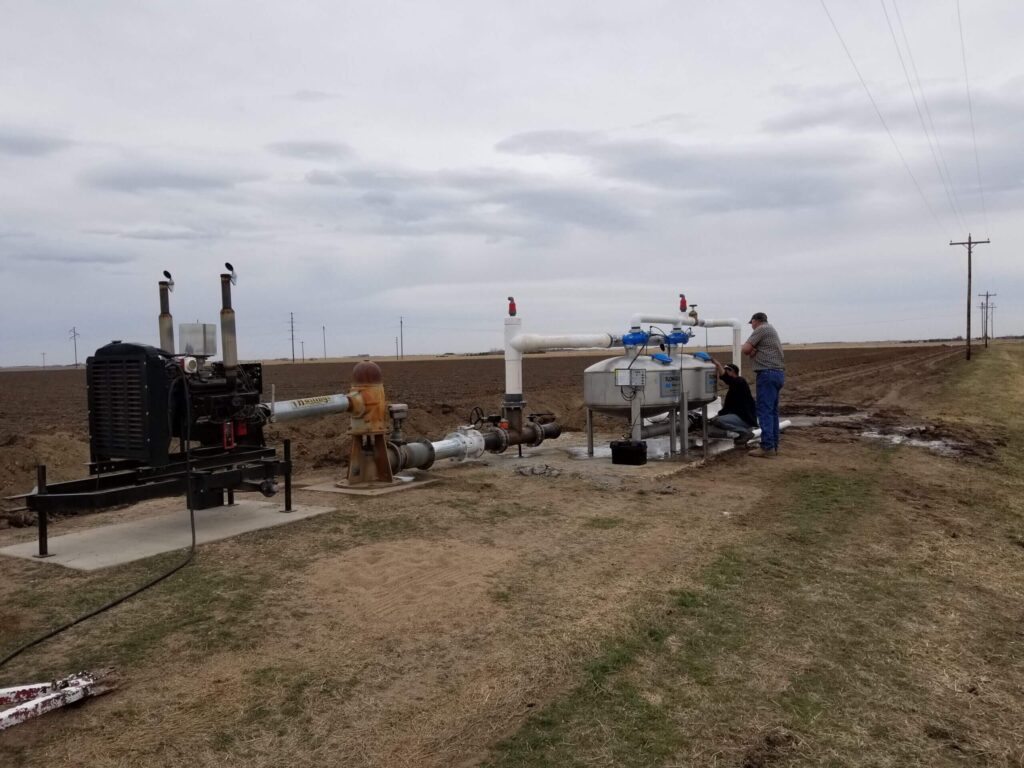
Soil moisture sensors provide real-time data about water availability in the crop root zone. These systems use various measurement technologies, including tensiometers, electrical resistance blocks, and capacitance sensors. Advanced systems integrate multiple sensors at different soil depths to provide comprehensive moisture profiles.
Wireless sensor networks allow farmers to monitor multiple field locations remotely, receiving alerts when irrigation is needed. Some systems integrate with automated irrigation controllers to provide completely autonomous water management.
Weather-Based Controllers
Evapotranspiration (ET) controllers use weather data to calculate crop water needs and adjust irrigation schedules accordingly. These systems consider factors such as temperature, humidity, wind speed, and solar radiation to estimate water loss from the crop canopy.
Advanced ET controllers incorporate crop coefficients that vary throughout the growing season, providing more accurate water requirement calculations. Integration with local weather station data or on-site weather monitoring improves accuracy further.
Variable Rate Irrigation
Variable rate irrigation (VRI) technology allows farmers to apply different amounts of water to different areas within the same field. This capability is particularly valuable in fields with varying soil types, topography, or crop conditions.
GPS-guided systems create prescription maps that direct irrigation equipment to apply specific amounts of water to designated field zones. This precision approach maximizes water efficiency while addressing site-specific crop needs.
Remote Monitoring and Control
Internet-connected irrigation systems allow farmers to monitor and control irrigation equipment from anywhere using smartphone apps or web interfaces. These systems provide real-time status updates, alert notifications, and historical data analysis.
Remote control capabilities enable farmers to respond quickly to changing field conditions, weather events, or equipment issues. This responsiveness is particularly valuable during critical growth periods when timing is essential.
How Western Irrigation Can Help
Western Irrigation brings decades of experience in designing and implementing smart irrigation solutions specifically tailored for corn production. Their comprehensive approach combines cutting-edge technology with practical field expertise to deliver irrigation systems that maximize both water efficiency and crop performance.
Customized System Design
Western Irrigation’s team of agronomists and engineers works closely with each client to develop irrigation systems that match their specific field conditions, crop requirements, and operational goals. This customized approach ensures optimal system performance from the start.
Site-specific analysis considers factors such as soil types, field topography, water sources, and existing infrastructure. The design process incorporates corn’s specific growth stage requirements to create irrigation schedules that support optimal plant development throughout the season.
Technology Integration
Western Irrigation specializes in integrating multiple smart irrigation technologies into cohesive management systems. Their solutions combine soil moisture monitoring, weather-based scheduling, and remote control capabilities to provide comprehensive irrigation management.
Advanced data analytics platforms help farmers interpret monitoring data and make informed irrigation decisions. Historical data analysis identifies trends and opportunities for system optimization over time.
Installation and Support Services
Professional SDI installation ensures smart irrigation systems operate at peak efficiency from day one. Western Irrigation’s certified technicians handle all aspects of system setup, calibration, and initial operation.
Comprehensive training programs help farmers and farm staff understand system operation and maintenance requirements. Ongoing technical support provides assistance with troubleshooting, system optimization, and seasonal adjustments.
Maintenance and Optimization
Regular system maintenance is crucial for long-term performance and reliability. Western Irrigation offers complete maintenance programs that include sensor calibration, equipment inspection, and performance monitoring.
Seasonal system optimization services help farmers adapt their irrigation strategies based on changing field conditions, crop varieties, or management objectives. This ongoing support ensures continued system effectiveness over many growing seasons.
Maximizing Your Corn Production Investment
Smart irrigation is more than just a tech upgrade—it’s a fundamental shift in farming that boosts efficiency and profitability in corn production. By understanding and precisely responding to a crop’s changing water needs throughout its growth cycle, you can see significant returns.
Investing in smart irrigation technology pays off through better water efficiency, more consistent yields, and lower operational risks. Partnering with experts like Western Irrigation gives you access to the latest technology and the support needed for successful implementation—from design and installation to ongoing maintenance.
Ultimately, smart irrigation is key to a sustainable and profitable future in farming, allowing you to maximize efficiency while minimizing environmental impact.