
Is Subsurface Drip Irrigation a Good Fit for Large-Scale Corn Fields?
Is Subsurface Drip Irrigation a Good Fit for Large-Scale Corn Fields?
Large-scale corn production requires immense resources, and water management stands out as one of the most critical factors for success. The agricultural sector faces an increasing need for water-efficient solutions as environmental regulations tighten and weather patterns become less predictable. Farmers must find innovative ways to sustain high yields while optimizing every drop of water applied to their crops.
This growing demand for efficiency brings subsurface drip irrigation (SDI) into the spotlight as a potential alternative to traditional irrigation methods. While commonly used in specialty crops, agricultural operators are now asking whether this underground water delivery system can successfully scale for massive row crop operations. Transitioning away from familiar overhead systems requires careful consideration of the agronomic and logistical impacts on the farm.
This guide explores the viability of subsurface drip irrigation for large acreage corn production. The following sections evaluate system mechanics, water efficiency, soil compatibility, and return on investment to help agricultural operators determine if SDI is a practical and beneficial choice for their specific field conditions.
Understanding Subsurface Drip Irrigation in Row Crops
How SDI Works in Corn Fields
Subsurface drip irrigation functions by delivering water directly to the root zones of the corn plants beneath the soil surface. A network of polyethylene tubing, known as driplines, is permanently buried in the ground at a precise depth and spacing tailored to the crop’s root structure. Emitters integrated into these tubes release water at a controlled, slow rate, ensuring that moisture radiates outward and upward through capillary action to reach the growing corn roots.
Comparison with Traditional Methods
Traditional center pivot and flood irrigation methods apply water from above, which leaves moisture exposed to the open air and varying field contours. Subsurface drip systems contrast sharply with these approaches because the water never touches the soil surface or the plant canopy. This fundamental difference eliminates the wind drift and runoff issues often associated with pivots, while providing far more precise distribution than the broad inundation typical of flood irrigation.
Key Advantages for Row Crops
The primary benefit of utilizing SDI in row crops lies in significantly reduced evaporation and highly targeted watering. By keeping the soil surface dry, the system minimizes weed seed germination and lowers the risk of fungal diseases within the corn canopy. Furthermore, the system allows for fertigation, which is the process of delivering liquid fertilizers directly to the root zone, thereby improving nutrient uptake and reducing the risk of chemical leaching.

Water Efficiency and Yield Potential
Optimized Water Usage
By applying water precisely where the plant needs it, subsurface drip systems minimize the waste commonly associated with agricultural irrigation. Operators can accurately match the daily evapotranspiration rates of the corn crop, providing just enough moisture to sustain growth without over-saturating the soil. This highly calibrated approach conserves millions of gallons of water over a growing season, making it a highly sustainable choice for regions facing water scarcity.
Impact on Crop Growth
Maintaining consistent soil moisture levels throughout the growing cycle leads to healthier, more robust corn development. Traditional irrigation often creates a cycle of saturation and mild drought stress between watering events, which can hinder optimal plant growth. SDI provides a continuous, low-volume supply of water and nutrients that prevents this stress cycle, allowing the corn plants to dedicate all their energy toward stalk development and ear formation.
Potential Yield Improvements
Highly efficient irrigation directly translates into higher productivity and potentially greater crop yields at harvest. Because the corn plants receive a steady supply of moisture and targeted nutrients precisely when they need them, the ears tend to fill out more completely and uniformly. Many agricultural producers report that stabilizing the growing environment through subsurface drip methods helps them consistently hit their upper-end yield targets year after year.
Soil Compatibility and Field Conditions
Best Soil Types for SDI
The texture and composition of the soil heavily influence the performance of a subsurface drip irrigation system. Medium-textured soils, such as silt loams and clay loams, generally provide the best capillary action, allowing water to move laterally and create an even wetting pattern. Extremely sandy soils may require closer dripline spacing because water tends to move straight down, while heavy clay soils require slower application rates to prevent waterlogging around the emitters.
Managing Soil Compaction
Proper water movement in large-scale operations depends on managing soil compaction, particularly above the buried driplines. Heavy agricultural machinery can compress the soil layers, restricting the capillary movement of water from the emitters up to the corn roots. Operators must utilize controlled traffic farming practices, ensuring that tractor tires and harvesting equipment travel on designated paths that do not cross directly over the buried irrigation tubes.
Field Layout Considerations
Designing an effective system requires addressing specific field topography, including slopes, drainage patterns, and uniformity challenges. Pressure-compensating emitters must be used on undulating terrain to ensure that plants at the top of a hill receive the exact same amount of water as those in lower depressions. Careful topographical mapping ensures that the system flushes properly and that air relief valves are placed at the highest elevations to prevent suctioning soil into the lines.
Installation Requirements and Field Preparation
System Design for Large Acreage
Planning layouts that cover extensive corn fields efficiently requires advanced engineering and hydraulic calculations. The design must account for the available flow rate from the water source, dividing the large field into smaller, manageable watering zones that can be irrigated sequentially. Mainlines, submains, and flush manifolds are sized and positioned to deliver equal pressure to every acre while minimizing the energy required to pump the water.
Equipment and Labor Needs
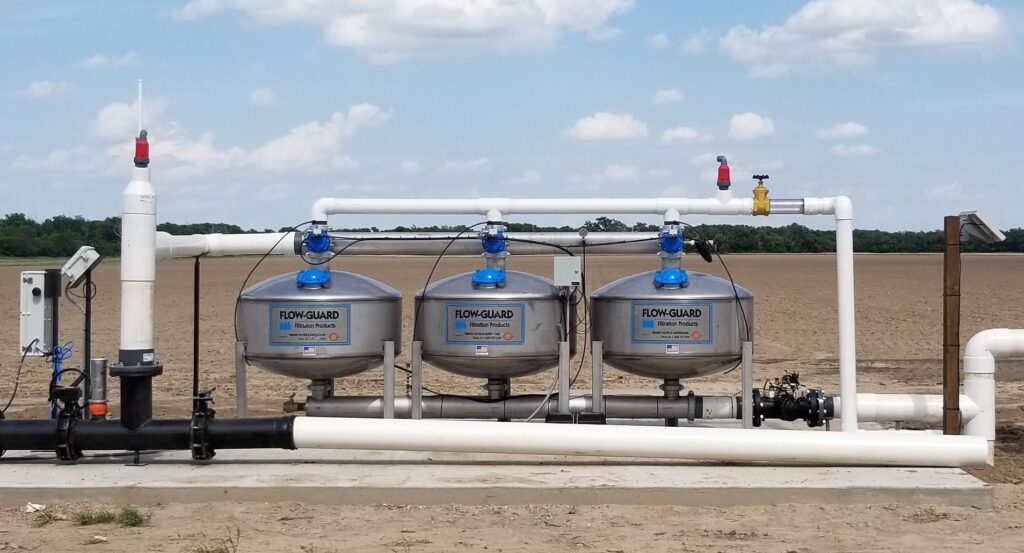
Understanding the resources required for installation helps set accurate expectations for the farm operation. Specialized GPS-guided tractors equipped with heavy-duty plows are utilized to inject the driplines into the soil at exact depths and intervals. Trenching equipment is also necessary to bury the larger PVC mainlines and manifolds, requiring skilled equipment operators and laborers to assemble the filtration units, valves, and automation controllers.
Timeline Expectations
Farmers should anticipate a structured timeline during the setup phase, which typically takes place after harvest or before spring planting. Depending on the acreage, laying the dripline and installing the underground infrastructure can take several weeks of continuous work. Proper planning is essential to ensure the installation does not interfere with the critical planting window, allowing the soil to settle and the system to be fully tested before the corn requires its first watering.
Cost Analysis and Return on Investment
Initial Investment Breakdown
Transitioning to an SDI system involves a substantial upfront capital expenditure focused on materials, system design, and specialized installation. The infrastructure includes heavy-grade polyethylene driplines, large-diameter PVC piping for mainlines, automated zone valves, and sophisticated filtration stations necessary to protect the emitters. Upgrading the pumping station and adding computerized control panels also factor into the initial setup requirements.
Operational Savings Over Time
Once installed, the system generates measurable operational savings through reduced water usage and lower energy consumption. Because the system operates at a much lower pressure than center pivots, the pumps require significantly less electricity or diesel fuel to distribute the water across the field.
Long-Term Profitability
Evaluating whether SDI pays off for large-scale corn production requires looking at the lifespan of the equipment and the cumulative yield benefits. A properly maintained subsurface system can last for decades, spreading the initial investment over many successful harvests. The combination of consistently higher corn yields, reduced input waste, and lowered energy demands typically results in a favorable long-term return on investment for dedicated agricultural operators.
Expert Guidance and Support
Professional Evaluation Services
Determining if a specific corn field is suitable for an SDI setup starts with a comprehensive professional assessment. Western Irrigation assesses field suitability by conducting thorough soil composition tests, topographical surveys, and water quality analyses. This rigorous evaluation ensures that the water source is free from severe biological or chemical contaminants that could plug the system, setting the foundation for a successful project.
Customized System Design
Every agricultural operation presents unique challenges, requiring tailored irrigation solutions for large corn fields. Western Irrigation provides detailed hydraulic blueprints that match the specific dimensions, slopes, and soil types of the property. The design phase integrates the latest technology and equipment, ensuring that zone sizes, pump capacities, and dripline spacing are perfectly aligned to maximize water distribution uniformity.
Ongoing Maintenance and Optimization
Ensuring long-term performance and efficiency requires dedicated after-sale support and seasonal maintenance protocols. Western Irrigation believes in creating long-lasting relationships with customers, offering guidance on winterization, system flushing, and acid treatments to keep emitters clean.
Challenges and Practical Considerations
Maintenance and Monitoring Needs
Preventing clogs and ensuring consistent performance stand as the most critical maintenance tasks for any subsurface system. Operators must routinely monitor pressure gauges and flow meters to detect leaks or blockages before they impact crop health. Regular flushing of the driplines and maintaining the filtration station are mandatory procedures to remove fine particulates and biological growth that accumulate within the underground tubing.
Adapting to Changing Conditions
Managing weather variability and crop cycles requires a highly responsive approach to irrigation scheduling. While SDI excels in dry conditions, operators must also account for sudden heavy rainfall, utilizing soil moisture probes to prevent waterlogging the root zone. Adjusting the irrigation and fertigation schedules throughout the different growth stages of the corn ensures the plants receive optimal support from emergence through the tasseling and grain-fill periods.
Scalability and Risk Management
Weighing potential risks against long-term benefits is essential when scaling these systems across thousands of acres. Rodent damage to buried lines is a known risk that requires proactive pest management strategies to prevent costly underground leaks. However, agricultural operators often mitigate these challenges by starting with a smaller pilot field, mastering the system’s operational nuances before expanding the infrastructure across the entire farm.
Making the Right Choice for Your Corn Operation
Evaluating subsurface drip irrigation reveals distinct advantages regarding water conservation, nutrient delivery, and overall plant health. By delivering moisture directly to the root zone, the system eliminates evaporation and provides an exceptionally uniform growing environment for row crops. While the initial setup requires extensive planning and capital, the resulting operational savings and yield boosts present a compelling case for modern agriculture.
It is highly recommended that operators evaluate their specific farm conditions and long-term goals before committing to an installation. Examining the local water table, soil texture, energy costs, and the availability of skilled labor will help determine if the infrastructure aligns with the farm’s operational capacity. Consulting with seasoned agricultural professionals ensures that all logistical variables are considered during the decision-making process.
Subsurface drip irrigation can be a highly effective tool for large-scale corn production when implemented thoughtfully and supported by the right expertise. Utilizing precise technology to manage natural resources not only bolsters seasonal profitability but also promotes sustainable farming practices. By investing in efficient infrastructure today, agricultural producers secure a more resilient and productive future for their farming operations.