How Agriculture Water Filtration Systems Pay for Themselves Over Time
How Agriculture Water Filtration Systems Pay for Themselves Over Time
Water is the lifeblood of agriculture, yet it’s becoming increasingly scarce and expensive. Farmers face mounting pressure to produce more with less while managing rising operational costs. For many, the solution lies in a strategic investment that may seem costly upfront but delivers substantial returns: agricultural water filtration systems.
These systems do more than just clean water. They protect irrigation equipment, boost crop yields, reduce chemical dependency, and lower energy consumption. The question isn’t whether you can afford to install a filtration system—it’s whether you can afford not to.
This guide explores how agricultural water filtration systems generate measurable financial returns, the various benefits they provide, and how partnering with experts like Western Irrigation can help you maximize your investment.
Understanding Agricultural Water Filtration Systems
Agricultural water filtration systems remove sediment, organic matter, and contaminants from irrigation water before it reaches your crops. Clean water means healthier plants, but it also protects the infrastructure that delivers that water.
These systems consist of several key components:
- Filters: The heart of the system, available in various types depending on your water source and needs
- Control Systems: Automated mechanisms that manage backflushing and cleaning cycles
- Pressure Regulators: Devices that maintain optimal water pressure throughout the system
- Distribution Networks: Pipes and valves that deliver filtered water to irrigation zones
Different filtration technologies serve different purposes:
Media filters use sand or gravel to trap particles and are particularly effective for removing organic matter and fine sediment. They’re ideal for surface water sources like rivers, lakes, or ponds.
Screen filters employ fine mesh screens to catch debris and work well for relatively clean water sources with occasional contaminants. They’re commonly used in well water applications.
Disc filters use grooved plastic discs stacked together to create a filtration barrier. They’re excellent for removing algae and organic materials while requiring minimal maintenance.
Centrifugal separators use centrifugal force to remove heavy particles like sand before water enters finer filtration stages. They’re often the first line of defense in multi-stage systems.
Choosing the right combination depends on your water source quality, irrigation method, crop type, and budget. That’s where expert guidance becomes invaluable.
Initial Investment and Setup Costs
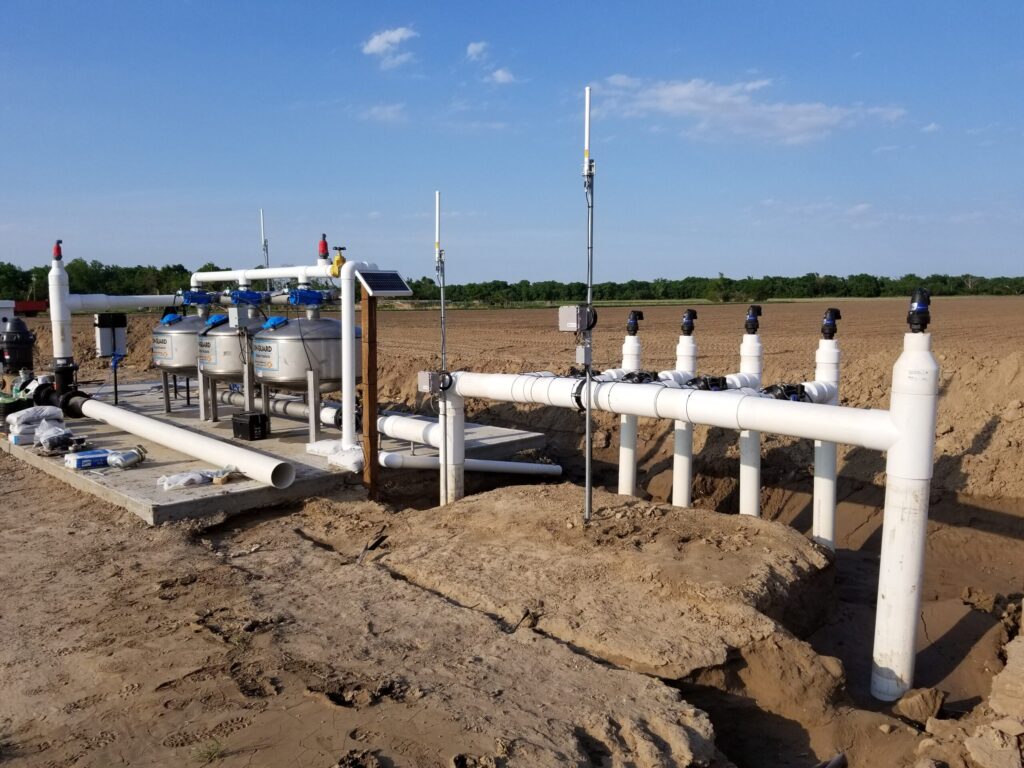
Understanding the upfront costs helps you plan your investment and calculate realistic payback periods. While every operation is different, here’s what typically goes into the initial investment:
- Equipment Costs: The filtration units themselves range from a few thousand dollars for basic screen filters to $20,000 or more for sophisticated multi-stage systems. The price depends on filtration capacity, technology type, and automation level.
- Installation Labor: Professional installation ensures proper system integration and optimal performance. Labor costs vary based on system complexity and site conditions but typically add 15-30% to equipment costs.
- Infrastructure Modifications: Existing irrigation systems may need modifications to accommodate filtration equipment. This might include pump upgrades, valve installations, or pipe rerouting.
- Control Systems: Automated systems with sensors, timers, and backflushing capabilities cost more initially but reduce long-term labor requirements and improve efficiency.
- Permits and Engineering: Depending on your location and water source, permits or engineering assessments may be required, adding to initial costs.
A typical mid-sized farm might invest $15,000 to $40,000 for a comprehensive filtration system. While this seems substantial, the return on investment becomes clear when you examine the ongoing savings and benefits.
Quantifiable Benefits: How Filtration Systems Save Money
The financial case for water filtration systems rests on five pillars of savings that compound over time.
Increased Crop Yields
Clean water delivers nutrients more effectively and prevents clogged emitters that create dry spots. Studies show that farms using proper filtration can see yield increases of 10-25% depending on the crop and previous water quality issues.
For a 100-acre farm growing high-value crops worth $5,000 per acre, a 15% yield increase translates to $75,000 in additional annual revenue. Even conservative 5-10% improvements justify the system investment within the first growing season.
Reduced Water Usage
Clogged irrigation systems waste water through inefficient distribution and increased pressure requirements. Filtration prevents emitter clogging, ensuring uniform water distribution and allowing you to irrigate with precision.
Farms typically reduce water consumption by 15-30% after installing filtration systems. If you’re pumping 500 acre-feet annually at $100 per acre-foot, a 20% reduction saves $10,000 yearly in water costs alone.
Lower Energy Costs
Sediment buildup forces pumps to work harder, consuming more electricity. Clean water flows more easily through pipes and emitters, reducing the energy needed to maintain proper pressure.
The average agricultural operation can reduce pumping energy costs by 10-20% with proper filtration. For farms spending $15,000 annually on irrigation energy, this represents $1,500 to $3,000 in yearly savings.
Decreased Chemical Use
Contaminated water can harbor pathogens and reduce the effectiveness of fertilizers and pesticides. Cleaner water means these inputs work as intended, reducing the quantities needed.
Farmers report 10-15% reductions in fertilizer and pesticide use after installing filtration systems. On operations spending $30,000 annually on these inputs, that’s $3,000 to $4,500 saved each year.
Additionally, cleaner water reduces plant stress and disease pressure, further decreasing the need for chemical interventions.
Maintenance Cost Savings
Sediment and contaminants cause premature wear on pumps, valves, and irrigation equipment. Replacing a damaged pump can cost $5,000 to $15,000. Rebuilding valve assemblies runs $500 to $2,000 each.
Filtration systems extend equipment lifespan by 30-50%, significantly reducing replacement and repair costs. Over a ten-year period, this can save $20,000 to $50,000 or more.
Regular maintenance also becomes less labor-intensive. Instead of constantly clearing clogged emitters and repairing damaged equipment, maintenance shifts to routine filter cleaning—a much simpler and less costly task.
Environmental Benefits: A Sustainable Approach
Financial returns matter, but sustainable water management also provides environmental benefits that increasingly influence regulatory compliance and market access.
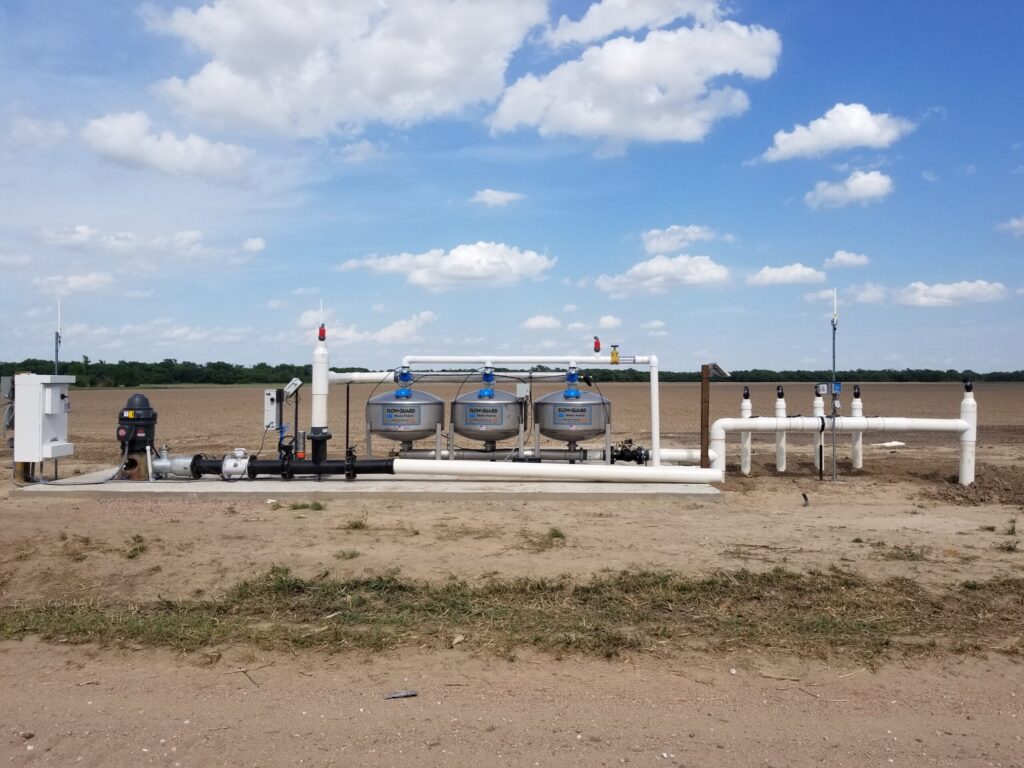
Filtration systems reduce agricultural runoff by improving irrigation efficiency. Less water application means less excess water carrying nutrients and chemicals into nearby waterways. This protects local ecosystems and helps farmers meet environmental regulations.
Water conservation extends resources for future generations. As water scarcity intensifies, operations that demonstrate responsible water stewardship gain competitive advantages in markets that value sustainability.
Many regions offer incentives, grants, or tax benefits for water conservation investments. These programs can offset initial installation costs, further improving the financial case for filtration systems.
Choosing the Right Filtration System with Western Irrigation
Selecting the optimal filtration system requires understanding your specific needs and water conditions. Western Irrigation brings decades of experience helping farmers navigate these decisions.
Western Irrigation offers a comprehensive range of filtration solutions including media filters, screen filters, disc filters, and custom multi-stage systems. Their team analyzes your water source, irrigation method, and crop requirements to recommend systems that deliver maximum value.
The company provides end-to-end support from initial water quality testing through system design, installation, and ongoing maintenance. This ensures your filtration system integrates seamlessly with existing infrastructure and performs reliably season after season.
Western Irrigation’s expertise extends beyond equipment sales. Their agronomists and irrigation specialists help you optimize your entire water management strategy, identifying opportunities for efficiency gains that complement your filtration investment.
They also offer financing options and can help you navigate available grants or incentive programs, making the investment more accessible and accelerating your payback timeline.
Long-Term ROI and Financial Payback
Let’s examine a realistic scenario to demonstrate the financial returns of water filtration systems.
Sample Farm Profile:
- 150 acres of high-value row crops
- Annual revenue: $750,000
- Current water costs: $12,000 annually
- Current energy costs: $18,000 annually
- Current fertilizer/pesticide costs: $35,000 annually
- Equipment maintenance and replacement: $8,000 annually
Investment:
- Filtration system cost: $30,000 (equipment and installation)
Annual Savings and Benefits:
- Increased yields (10%): $75,000
- Reduced water usage (20%): $2,400
- Lower energy costs (15%): $2,700
- Decreased chemical use (12%): $4,200
- Maintenance savings (30%): $2,400
Total Annual Benefit: $86,700
Even using conservative estimates, the system pays for itself in less than four months. Over ten years, the cumulative benefit exceeds $850,000—nearly 30 times the initial investment.
This calculation doesn’t include avoided costs from equipment failures, crop losses due to irrigation problems, or environmental compliance issues. It also doesn’t account for potential increases in crop quality that command premium prices.
The payback period varies based on operation size, crop type, and local conditions, but most farms achieve full ROI within 1-3 years. From that point forward, the benefits represent pure savings and increased profitability.
Securing Your Operation’s Future Through Smart Water Management
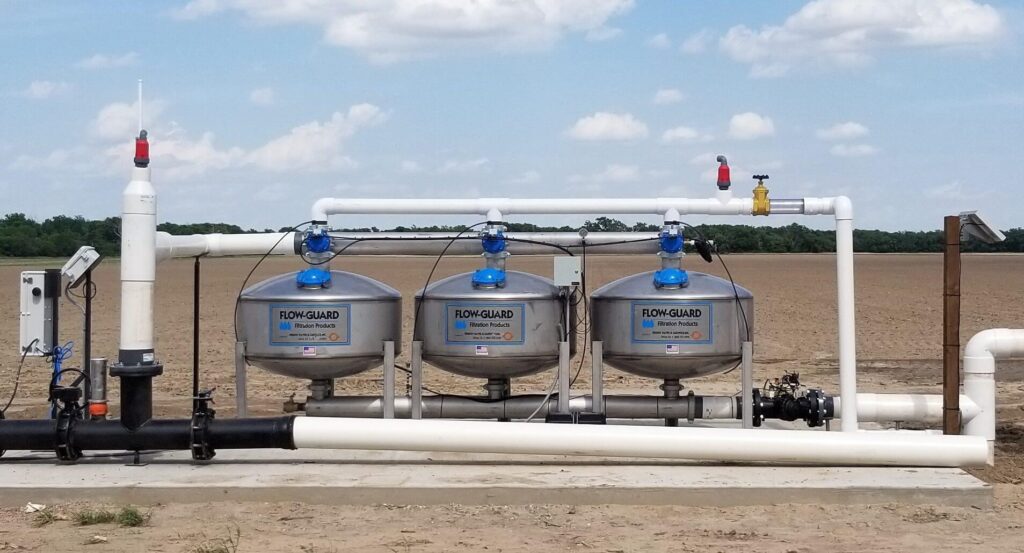
Agricultural water filtration is a smart investment, protecting equipment, boosting yields, and saving costs. The initial outlay quickly pays for itself, driving long-term profitability and sustainability. With water scarcity a growing reality, efficient water management provides a crucial competitive advantage. Western Irrigation offers expert evaluation and customized solutions, helping you maximize your return and secure your farm’s future. Contact us today for a water quality assessment and transform your operation.