
Comparing Corn Irrigation Methods: From Pivot to Subsurface Drip
Comparing Corn Irrigation Methods: From Pivot to Subsurface Drip
Water management is the unsung hero of a successful corn harvest. While seed selection and soil health often dominate the conversation, the way you deliver water to your crop can make or break your yield—and your bottom line. With water resources tightening and input costs rising, choosing the right irrigation system is one of the most critical decisions a modern farmer can make.
Two methods currently dominate the landscape: the traditional, reliable Center Pivot system and the precise, efficient Subsurface Drip Irrigation (SDI). Each has its champions and its challenges. For farmers navigating this choice, Western Irrigation stands ready as a trusted partner in professional irrigation system sales and installation, helping you weigh the pros and cons to find the perfect fit for your fields.
The Role of Irrigation in Corn Farming
Corn is a notoriously thirsty crop. To reach its full potential, a corn plant requires consistent moisture throughout its growth cycle, particularly during the critical pollination and grain-fill stages. Even short periods of water stress can lead to significant yield reductions, stunted growth, and poor kernel development.
However, providing that water is becoming increasingly difficult. Many regions are grappling with shrinking aquifers, unpredictable rainfall patterns, and stricter regulatory limits on water usage. Efficient water management is no longer just about maximizing yield; it’s about survival. Farmers must balance the biological needs of the crop against the economic and environmental realities of their specific location. This pressure makes the efficiency of your irrigation system a key driver of overall farm profitability.
Center Pivot Irrigation: The Traditional Workhorse
If you drive through the Corn Belt, you’ll see the iconic silhouette of center pivot irrigation systems stretching across the horizon. For decades, this method has been the standard for large-scale corn production.
How it Works
Center pivot systems consist of a long pipeline supported by towers on wheels, which rotate around a central pivot point. Sprinklers positioned along the pipeline distribute water from overhead, mimicking natural rainfall.
Advantages
The popularity of center pivot irrigation isn’t accidental. It offers significant advantages, primarily in scalability and cost.
- Scalability: It is exceptionally well-suited for large, square, or circular fields, allowing farmers to irrigate hundreds of acres with a single system.
- Ease of Use: Modern pivots are highly automated. Farmers can control speed and direction remotely, making day-to-day management relatively simple.
- Lower Upfront Costs: Compared to subsurface options, the initial hardware and installation costs for center pivots are generally lower.
Limitations
Despite its prevalence, center pivot irrigation has drawbacks. The most significant is water loss. Because water is sprayed through the air, evaporation and wind drift can reduce the amount of moisture that actually reaches the root zone. Additionally, pivots struggle with irregularly shaped fields, often leaving corners dry or requiring expensive “corner arm” attachments to reach them.
Subsurface Drip Irrigation (SDI): The Modern Contender
While center pivots rain from above, Subsurface Drip Irrigation (SDI) works from below. This method is gaining traction among corn farmers looking to push efficiency to the absolute limit.
How it Works
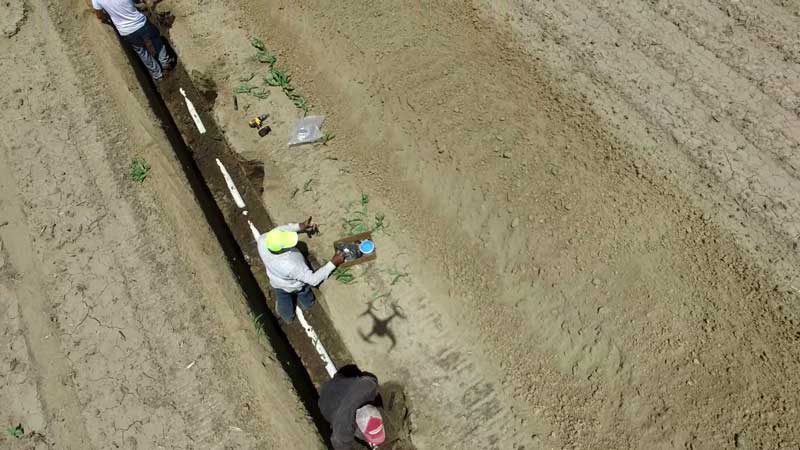
SDI systems involve a network of permanent drip tapes or tubes buried 12 to 18 inches beneath the soil surface. These tubes have emitters spaced at regular intervals that deliver small, precise amounts of water directly to the crop’s root zone.
Benefits
The primary advantage of SDI is unmatched efficiency.
- Precise Water Delivery: By delivering water directly to the roots, SDI eliminates wind drift and surface evaporation. This ensures that nearly every drop pumped is available to the plant.
- Water Conservation: Studies have shown that SDI can reduce water usage by 25% or more compared to overhead systems while maintaining or even increasing yields.
- Field Versatility: Unlike pivots, SDI can be installed in fields of any shape or size, maximizing land use efficiency.
Challenges
The transition to SDI isn’t without hurdles. The initial investment is typically higher than center pivot systems due to the cost of materials and the specialized installation required. Maintenance is also different; because the system is underground, detecting leaks or clogs requires careful monitoring and filtration management.
Key Factors to Consider When Choosing an Irrigation System
There is no “one-size-fits-all” answer in irrigation. The right choice depends on a complex interplay of factors unique to your operation.
Soil Type and Field Layout
Soil texture plays a huge role. Sandy soils that drain quickly may benefit immensely from the frequent, small applications of water that SDI provides. Heavy clay soils might hold water longer, potentially making pivot irrigation sufficient. Furthermore, if your fields are irregularly shaped or have significant topography changes, SDI offers flexibility that pivots cannot match.
Water Availability and Quality
If you are operating in an area with strict water allocations or limited well capacity, the high efficiency of SDI might be the only way to maintain your acreage. Water quality matters, too—high mineral content can clog drip emitters, requiring robust filtration systems for SDI setups.
Labor and Management
Consider your team’s capacity. Pivots are mechanically complex but visible; you can see a flat tire or a stuck tower. SDI systems are invisible, requiring a shift in management mindset to rely on flow meters and pressure gauges to diagnose issues.
Long-Term Goals
Are you managing for this year’s cash flow or building a system for the next 20 years? If sustainability and maximizing yield per acre-inch of water are your top priorities, SDI is a compelling long-term play.
Economics of Irrigation: Cost vs. ROI
The financial comparison between these two systems often comes down to upfront capital versus long-term operational costs.
Center pivot systems generally win on initial sticker price. The lower barrier to entry makes them attractive for operations with limited capital or those leasing land on shorter terms. However, the operational costs can be higher over time. Pumping water is energy-intensive. Because pivots are less efficient, you pump more water to achieve the same agronomic result, driving up energy bills.
SDI systems require a larger upfront investment, often costing significantly more per acre to install. However, the return on investment (ROI) comes from several angles:
- Energy Savings: Pumping less water means lower electricity or diesel costs.
- Labor Savings: Once automated, SDI can require less daily physical labor than moving or fixing pivots.
- Yield Increases: The stress-free, consistent moisture environment created by SDI often boosts corn yields, generating more revenue per acre.
Western Irrigation specializes in helping farmers run these numbers. By analyzing your specific field conditions and energy costs, they can project an accurate ROI timeline to help you make an informed financial decision.
Environmental Impact: Conservation and Sustainability
As stewardship of the land becomes central to farming’s social license to operate, the environmental footprint of irrigation matters.
Both systems are vast improvements over flood irrigation, but SDI holds the edge in sustainability metrics. By eliminating surface runoff and deep percolation (water draining below the root zone), SDI prevents fertilizer and nutrients from leaching into groundwater. This nutrient efficiency means farmers can often apply less fertilizer while still meeting crop needs, further reducing environmental impact.
Center pivots can be managed efficiently with low-elevation spray application (LESA) packages, but the physics of spraying water through the air inherently involves more loss than keeping it underground. For farmers aiming to position their operation as a leader in sustainability, SDI is a powerful tool.
How Western Irrigation Can Help You Decide
Navigating the technical and economic trade-offs of irrigation systems requires expertise. Western Irrigation brings years of experience in professional irrigation system sales and installation to your farm gate.
While they service all types of systems, Western Irrigation recognizes the transformative potential of Subsurface Drip Irrigation (SDI) for modern corn growers. It is one of their most essential and effective services, designed to help farmers overcome water restrictions and maximize yield potential.
Western Irrigation offers comprehensive consultation services to assess your farm’s unique topography, soil, and water resources. They don’t just sell you hardware; they design a solution tailored to your operational goals. And once the system is in the ground—or towering above it—they provide the ongoing support and maintenance needed to ensure optimal performance season after season.
Securing Your Yields
Whether you stick with the proven reliability of a center pivot or leap into the high-efficiency world of subsurface drip, the goal remains the same: growing the best corn possible with the resources at hand.
Water is a finite resource, but innovation in agriculture is limitless. By carefully evaluating your field conditions, economic goals, and environmental priorities, you can choose an irrigation system that secures your farm’s future. If you are ready to explore your options, contact Western Irrigation today for expert advice and solutions tailored to your needs.