
A Closer Look at How Water Moves Through Subsurface Drip Systems
A Closer Look at How Water Moves Through Subsurface Drip Systems
Agricultural success relies heavily on getting water exactly where crops need it most. Subsurface Drip Systems (SDS) have completely transformed modern farming by placing water and nutrients directly below ground. Unlike traditional methods that spray water across the surface, SDS uses a network of buried tubes and emitters to deliver moisture straight to the root zone.
Delivering water efficiently beneath the soil surface drastically reduces evaporation and runoff. Farmers using these systems often see significant improvements in crop yields alongside substantial water savings. However, the exact way water travels from a buried emitter through the soil remains a complex process governed by physics, engineering, and environmental factors.
Understanding this underground movement helps growers make better irrigation choices. Western Irrigation, proudly serving farmers near Nebraska and across the region, specializes in designing and installing these intricate systems. By looking closely at the mechanics of SDS, we can see exactly why expert design and maintenance are essential for peak agricultural performance.
The Science Behind Water Movement in Subsurface Drip Systems
To truly grasp how an SDS works, we need to look at the basic physical laws governing water and soil interactions. The journey of a water droplet from the underground tube to a plant’s roots is highly structured.
Soil Physics Fundamentals
Water movement underground is primarily driven by capillary action and soil moisture tension. Capillary action is the ability of a liquid to flow in narrow spaces without the assistance of, or even in opposition to, external forces like gravity. Soil moisture tension refers to how tightly water is held by soil particles. Dry soil exerts a high tension, pulling water forcefully, while wet soil has low tension.
Soil texture heavily dictates these forces. Soil is made up of sand, silt, and clay particles. The specific ratio of these particles changes how water moves. Furthermore, understanding the soil infiltration rate—how fast water enters the soil—is vital. If an irrigation system applies water faster than the infiltration rate, the water will pool or channel away from the intended root zone, defeating the purpose of the subsurface design.
Emitter Design and Function
Emitters are the small valves spaced along the drip tape that release water into the soil. Their design is a masterpiece of fluid dynamics. They are built to discharge a precise amount of water over a specific time, usually measured in gallons per hour.
Many modern emitters feature pressure compensation mechanisms. This means they deliver a consistent flow rate regardless of variations in water pressure along the length of the tubing. This is especially important for uneven terrain. Additionally, emitter spacing plays a huge role in water movement. The distance between each emitter must be carefully calculated so that the individual wetting patterns merge seamlessly, creating a continuous band of moisture along the crop row.
Factors Influencing Water Distribution in SDS
Several environmental and mechanical factors can alter the path water takes once it leaves the emitter.
Soil Type and Structure
The spread of water differs drastically between sandy soils and clay soils. Sandy soil has large particles and large pore spaces. Water moves through it quickly and mostly downward, pulled heavily by gravity. This creates a narrow, deep wetting pattern. Clay soil has tiny particles and small pore spaces, which creates strong capillary forces. Water moves slowly in clay and spreads out laterally, creating a wide, shallow wetting pattern.
Soil compaction and organic matter also play a role. Heavily compacted soil restricts pore spaces, severely slowing down water movement and limiting root growth. Conversely, high organic matter improves soil structure, acting like a sponge to hold moisture while allowing excess water to drain properly.
Emitter Characteristics
The flow rate of an emitter directly affects the wetting diameter. A high flow rate in tight clay soil might push water to the surface, creating unwanted puddles. A low flow rate in sandy soil might result in water dropping too quickly below the root zone. Quality control and manufacturer specifications are critical here. Farmers must trust that an emitter rated for a specific flow will actually deliver that exact amount consistently over years of use.
System Pressure and Hydraulics
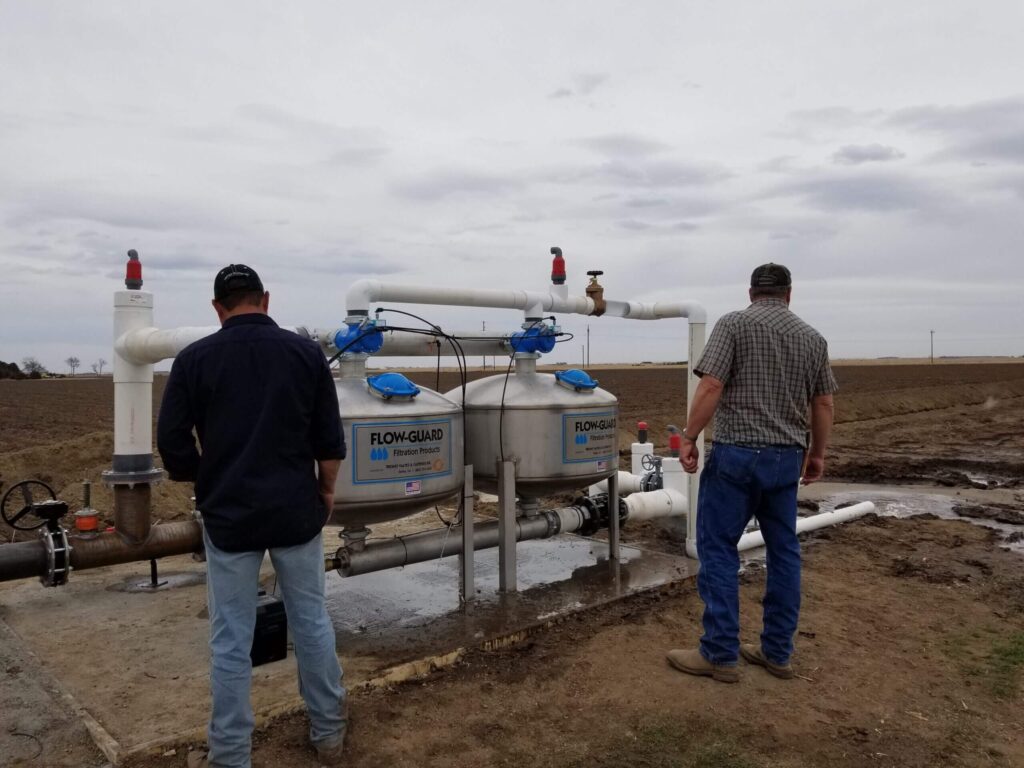
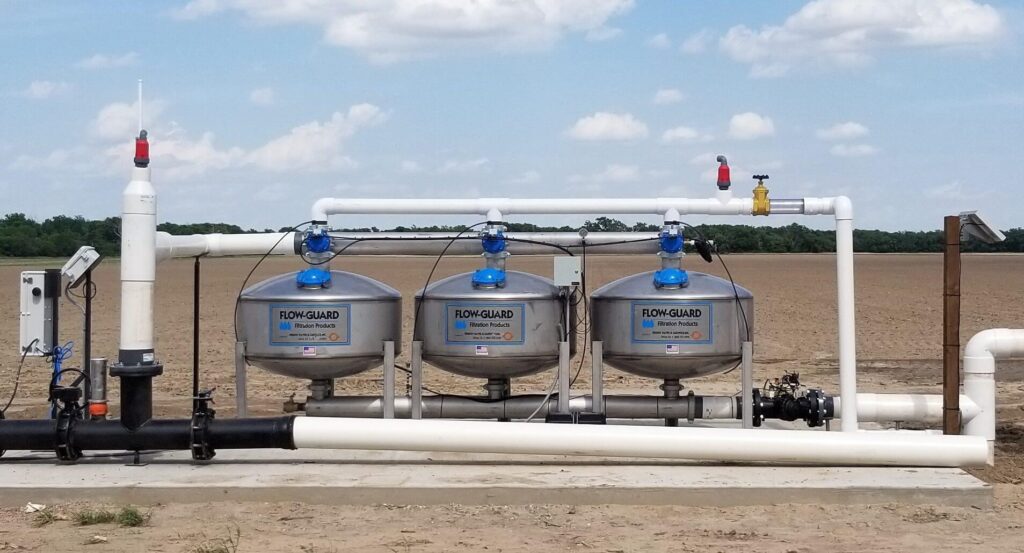
Maintaining uniform pressure across the entire irrigation system is the backbone of efficient water distribution. If pressure drops significantly at the end of a field, those plants will receive less water. Engineers use specialized pressure regulators to ensure steady flow. Proper filtration is equally important, as debris can alter the hydraulic pressure and disrupt the designed flow rates.
Water Quality
The physical and chemical makeup of the irrigation water heavily influences system performance. High levels of dissolved solids, such as calcium or magnesium, can precipitate out of the water and clog emitters. This completely stops water movement to that specific area. Regular chemical treatments and routine system flushing are necessary to prevent mineral buildup and organic growth, ensuring unimpeded water flow.
How Water Moves from Emitter to Root Zone
Visualizing what happens underground helps farmers manage their irrigation scheduling more effectively.
Making Sense of Wetting Patterns
As water leaves the emitter, it creates a three-dimensional shape known as a wetting bulb. The size and shape of this bulb develop based on the soil characteristics and emitter flow rates discussed earlier. Ideally, water should move laterally to connect with the moisture from adjacent emitters, while moving vertically just enough to cover the entire root depth without draining past it.
Root Zone Interaction
Plants take up water through microscopic root hairs, relying on a complex pressure gradient between the soil and the plant tissue. Optimizing water placement means ensuring the highest concentration of moisture sits right where the most active root hairs are located. Different crops have completely different root architectures. Corn roots stretch deep and wide, requiring a larger wetting bulb, while certain vegetable crops have shallow, concentrated root systems requiring precise, frequent watering.
Advanced Techniques for Monitoring and Optimizing SDS Water Movement
Technology has taken the guesswork out of managing subsurface water movement. Modern tools provide actionable insights for daily irrigation decisions.
Soil Moisture Sensors
Soil moisture sensors act as the eyes underground. There are several types, including tensiometers that measure soil tension and volumetric sensors that measure the actual percentage of water in the soil. These devices transmit real-time data to a farmer’s phone or computer. This data indicates exactly when the root zone is drying out and when it has reached its holding capacity, preventing both under-watering and wasteful over-watering.
System Uniformity Assessment
Even the best systems can experience wear and tear. Agricultural engineers perform Distribution Uniformity (DU) calculations to assess how evenly water is being applied across a field. A low DU score indicates that some areas are getting soaked while others stay dry. Identifying these inefficiencies allows maintenance teams to replace faulty regulators, flush clogged lines, or adjust pressures before crop health declines.
Predictive Modeling
Software programs can now simulate underground water movement. By inputting specific soil types, crop data, and emitter specifications, predictive models show exactly how the wetting bulb will form over time. Integrating live weather data allows the software to adjust irrigation schedules dynamically, accounting for recent rainfall or upcoming heatwaves to maintain optimal root zone moisture.
Western Irrigation’s Approach to SDS Efficiency
Located near Nebraska, USA, Western Irrigation provides localized expertise to help farmers maximize their resources.
Custom Design and Installation
We understand that a successful subsurface drip system cannot come from a generic blueprint. We test your specific soil texture, assess your field topography, and consider your primary crops. From there, we design a custom SDS with the exact emitter spacing, flow rates, and pressure regulation needed to create the perfect wetting patterns for your farm.
Maintenance and Troubleshooting Services
An irrigation system is a major investment that requires ongoing care. Our team provides comprehensive maintenance services, including routine line flushing, chemical treatments to prevent emitter clogging, and advanced troubleshooting using distribution uniformity assessments. We ensure water moves through your system exactly as it was designed to.
The Tangible Benefits of Optimized Water Movement
When water distribution is dialed in perfectly, the advantages are seen across the entire farming operation.
Water Conservation
Targeted subsurface delivery practically eliminates surface evaporation and agricultural runoff. Every drop pumped from the aquifer goes directly to the plant, drastically reducing total water usage.
Increased Crop Yield and Quality
Plants thrive on consistency. By maintaining optimal moisture levels in the root zone without the stress of drought or waterlogging, crops grow stronger and produce higher yields of better quality.
Reduced Fertilizer Leaching
Many subsurface systems also deliver liquid fertilizers directly to the roots (fertigation). Precise water movement ensures these nutrients stay in the root zone where the plant can absorb them, rather than washing away into deep groundwater tables.
Energy Savings
Pumping water requires significant electricity or diesel fuel. Because an optimized SDS uses less total water and often operates at lower pressures than traditional pivot sprinklers, energy costs are noticeably reduced over the course of a season.
Maximizing Your Agricultural Potential
Water movement in a subsurface drip system service is a complex interplay of soil physics, fluid dynamics, and biological needs. From the moment water is forced through a pressure-compensating emitter to the second it is absorbed by a root hair, every variable matters. Understanding the factors that influence wetting patterns—like soil texture and flow rates—empowers agricultural professionals to make smarter, more efficient choices.
Partnering with knowledgeable professionals ensures that these complex systems are built correctly from the start. A well-designed system translates directly to conserved resources, lower operating costs, and healthier crops.
If you want to upgrade your agricultural operation, contact Western Irrigation today. Our team is ready to design, install, and maintain a subsurface drip system tailored perfectly to your Nebraska farmland.