Corn Irrigation Strategies That Support Consistent Yield Development
Corn Irrigation Strategies That Support Consistent Yield Development
Achieving a profitable harvest season requires careful planning, exceptional timing, and the right resources. For farmers growing corn, consistent yield development is the ultimate goal. Every growth stage of the corn plant relies heavily on adequate moisture, making water management one of the most critical factors in agricultural success.
Irrigation plays a foundational role in corn production. It acts as an insurance policy against unpredictable weather patterns and prolonged dry spells. By supplying the exact amount of water needed at the right time, farmers can significantly reduce crop stress and maximize the potential of their chosen seed hybrids.
Implementing the best corn irrigation practices can be challenging. That is exactly where Western Irrigation steps in. We provide specialized irrigation services near Nebraska, USA, helping local farmers design and maintain systems that promote strong, reliable corn yields year after year.
Understanding Corn Water Requirements
Water needs fluctuate dramatically throughout the lifecycle of a corn plant. Knowing when the plant requires the most moisture helps you allocate resources efficiently.
Growth stages and critical water needs
Early vegetative stages require relatively little water. The demand increases sharply as the plant approaches the tasseling and silking stages. During this reproductive phase, corn reaches its peak water usage, often needing up to a third of an inch of water per day. Adequate moisture during pollination is vital for kernel set and overall ear development.
Impact of water stress on corn yield
Water stress during the reproductive stages can cause irreversible damage. If the plant lacks moisture during silking, pollination may fail, leading to barren ears or missing kernels. Even during the grain fill period, a lack of water can reduce kernel weight, ultimately lowering the total harvest volume.
Factors influencing water demand
Several environmental variables affect how much water your crop will actually use. Sandy soils drain quickly and require more frequent watering, whereas clay soils hold moisture longer. Local climate conditions, such as high temperatures and low humidity, increase evaporation rates. Furthermore, different corn hybrids possess varying degrees of drought tolerance, influencing your overall watering schedule.
Types of Irrigation Systems for Corn
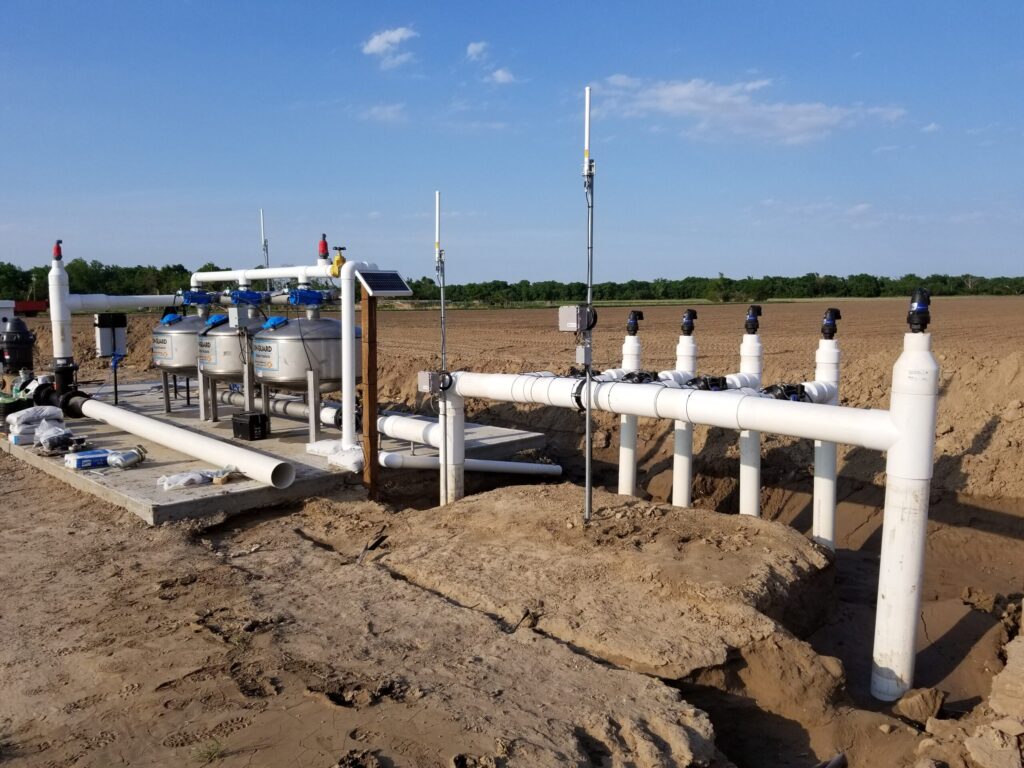
Selecting the right equipment is a foundational step in your water management strategy. Different systems offer distinct advantages depending on your field layout, soil type, and budget.
Center Pivot Irrigation
Center pivots are highly popular across the Midwest due to their reliability and coverage capabilities. They allow for uniform water distribution across large, relatively flat fields. The primary disadvantage is the potential for evaporation in hot, windy conditions before the water reaches the soil. However, modern technology has vastly improved pivot efficiency. GPS guidance ensures precise movement, while Variable Rate Irrigation (VRI) panels allow operators to adjust flow rates across different zones of the field.
Drip/Micro-irrigation
Drip systems deliver water directly to the root zone, significantly reducing loss from evaporation or wind drift. This precision leads to exceptional water efficiency. Subsurface drip irrigation (SDI) is particularly beneficial for corn. By burying the drip lines underground, you keep the soil surface dry, which helps suppress weed growth and minimizes soil compaction from heavy machinery.
Furrow Irrigation
Furrow, or gravity irrigation, is a traditional method that involves pumping water down small trenches between crop rows. While it generally requires a lower initial capital investment than pivots or SDI, it is often less efficient due to deep percolation and runoff at the end of the field. Modern improvements, such as surge valves and poly-pipe with precise hole sizing, have helped improve water distribution uniformity and reduce waste in furrow-irrigated fields.
Developing an Effective Irrigation Strategy
Having the right equipment is only half the equation. You must also know exactly when to run your system and how much water to apply.
Soil Moisture Monitoring
Guessing soil moisture levels based on the surface appearance often leads to over-watering or under-watering. The traditional “feel method” involves taking soil samples with a probe and assessing moisture by touch, which requires experience and time. Today, soil moisture sensors provide real-time data from multiple depths in the root zone. By reading this data, you can see exactly how much water the plant is extracting and schedule your next pass before stress begins.
Weather Data Integration
Modern farming requires looking ahead. Integrating weather forecasts with historical climate data helps you anticipate crop needs. A key metric is Evapotranspiration (ET), which calculates the amount of water lost to the atmosphere through soil evaporation and plant transpiration. By tracking daily ET rates, you can replace the exact amount of water the crop consumed the previous day, maintaining a perfect balance in the soil profile.
Crop Modeling and Scheduling Tools
Software solutions now offer predictive analytics to take the guesswork out of scheduling. These programs combine soil data, weather forecasts, ET calculations, and your specific corn hybrid’s growth stage into a single dashboard. They predict when the crop will reach critical growth phases and recommend optimal watering times to maximize yield potential while conserving resources.
Advanced Irrigation Techniques for Consistent Yields
Pushing your yields to the next level requires moving beyond basic scheduling and adopting precision agriculture techniques.
Variable Rate Irrigation (VRI)
Very few fields have perfectly uniform soil types or topography. VRI technology allows center pivots to change application rates on the fly. As the pivot moves over a sandy ridge, it can speed up or apply more water; as it passes through a low-lying clay depression, it can slow down or turn off specific nozzles. This tailored approach prevents waterlogging in low spots and drought stress on high ground, leading to a highly uniform yield across the entire field.
Deficit Irrigation
Deficit irrigation is a strategy where water is intentionally withheld during specific, less critical growth stages. The goal is to maximize the productivity of every drop of water applied without causing a significant drop in yield. For example, allowing mild stress during the early vegetative stages can encourage deeper root growth. This technique requires careful monitoring but proves highly valuable in regions facing strict water allocations.
Chemigation and Fertigation
Your watering system can serve as a highly efficient delivery mechanism for crop inputs. Fertigation involves injecting liquid fertilizers, like nitrogen, directly into the irrigation water. This allows you to spoon-feed the crop exactly what it needs, right when it needs it, reducing the risk of nutrient leaching from heavy rains. Chemigation uses the same principle to apply herbicides or insecticides, saving a trip across the field with a sprayer.
Western Irrigation’s Approach to Corn Irrigation
Farming in the heart of the Corn Belt requires equipment and strategies built for local conditions. Western Irrigation understands the specific challenges faced by producers in and around Nebraska.
Customized Irrigation Plans
No two farming operations are identical. The team at Western Irrigation starts by assessing your specific field conditions, soil types, and production goals. They design customized layouts that maximize coverage and efficiency. Whether you need a simple pivot upgrade or a comprehensive VRI system, they tailor the solution to fit your agronomic needs and budget.
Cutting-Edge Technology Integration
Staying profitable means staying ahead of the technology curve. Western Irrigation provides access to the industry’s most innovative tools. They help producers integrate remote monitoring systems, allowing you to check pivot status, adjust flow rates, and view soil moisture data directly from a smartphone. This connectivity saves countless hours of driving and provides peace of mind during the busy summer months.
Support and Service
Even the best equipment requires routine maintenance and occasional repairs. Western Irrigation offers comprehensive support, from the initial installation to end-of-season winterization. Their expert technicians provide prompt troubleshooting to keep your water flowing during critical heat waves. Furthermore, they offer consultation and training so farm operators can confidently manage their new technology.
Challenges and Solutions in Corn Irrigation
While drip irrigation secures your yield, it comes with a set of modern challenges that require proactive management.
Water Availability and Conservation
Aquifer depletion and regulatory water allocations are a reality for many producers. Conserving water is no longer just an environmental goal; it is an economic necessity. Adopting high-efficiency systems like SDI, utilizing VRI, and scheduling based on ET data are practical ways to grow more bushels per drop of water pumped.
Energy Costs and Efficiency
Pumping water requires a massive amount of energy, making electricity and diesel costs a major line item on any farm budget. Ensuring your pumps and motors are properly sized and operating efficiently can yield significant savings. Converting older, high-pressure systems to low-pressure drop nozzles also reduces the energy required to push water through the pipes.
Adapting to Extreme Weather
Climate variability brings heavier, less frequent rainfalls and prolonged periods of extreme heat. Your water management infrastructure must be resilient enough to handle these swings. Utilizing soil moisture sensors helps you capitalize on natural rainfall by leaving room in the soil profile to capture it, preventing runoff. During heatwaves, robust systems ensure you can supply the crop’s massive daily water demand without falling behind.
Securing Your Future Harvest
Consistent yield development in corn is not a matter of luck. It requires a deep understanding of plant water requirements, careful selection of irrigation equipment, and the implementation of data-driven watering strategies. By integrating advanced tools like soil sensors, ET data, and VRI technology, farmers can optimize their resources and protect their crops from environmental stress.
Informed irrigation management is the key to farm profitability. Navigating the complexities of agricultural technology is much easier when you have a trusted partner. Western Irrigation is dedicated to helping Nebraska-area farmers implement efficient, effective watering solutions. Contact us today to discuss how we can help you build a more resilient and productive farming operation.