Subsurface Drip Irrigation for Corn: Equipment, Layout, and Setup
Subsurface Drip Irrigation for Corn: Equipment, Layout, and Setup
Water is the lifeblood of any successful agricultural operation. For corn growers, maximizing yield while minimizing resource waste presents a constant challenge. Unpredictable weather patterns and rising input costs require farmers to find more precise ways to manage their crops. That is why modern agriculture is rapidly shifting toward highly efficient water management technologies.
Subsurface Drip Irrigation (SDI) offers a powerful solution to these agronomic challenges. By delivering water and nutrients directly to the root zone beneath the soil surface, SDI systems virtually eliminate evaporation and surface runoff. This targeted approach allows corn plants to thrive, even during periods of intense heat or limited rainfall.
Transitioning to a new irrigation method requires careful planning and reliable partnerships. Western Irrigation specializes in designing and implementing custom SDI solutions tailored to your specific field conditions. We provide the expertise and equipment necessary to help you increase your corn yields while conserving valuable resources.
Understanding SDI Equipment for Corn
A successful SDI system relies on high-quality components working together seamlessly. Knowing the function of each part will help you make informed decisions about your investment.
Drip lines and emitters
Drip lines are the core of your SDI system. For corn, heavy-wall polyethylene tubing is typically used to withstand subsurface conditions. Emitters are built into these lines at specific intervals to release water at a controlled flow rate. Your soil type will determine the ideal emitter spacing and flow rate to ensure an even wetting pattern.
Filtration systems
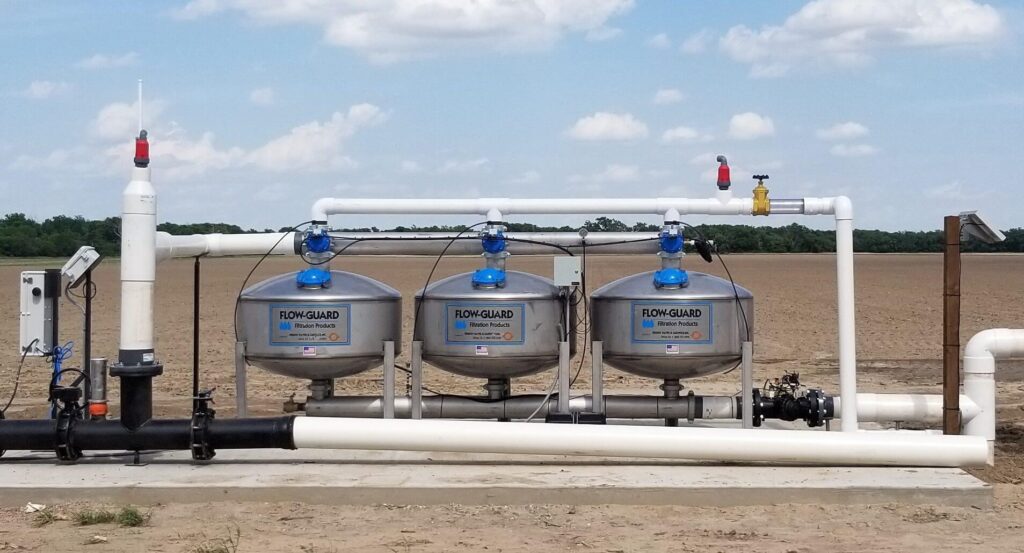
Keeping your emitters free of debris is critical for the longevity of your system. Filtration systems remove particulates, biological matter, and minerals from your water source. Depending on your water quality, you may need screen filters, disc filters, or sand media filters to prevent clogging.
Pressure regulation and control valves
Consistent water pressure is required to maintain uniform application across the entire field. Pressure regulating valves ensure that emitters at the end of a line receive the exact same amount of water as those near the pump. Control valves also allow you to isolate specific zones for targeted watering.
Pumps and water sources
Your pump must be properly sized to handle the flow and pressure requirements of your SDI design. Whether you are drawing from a deep well, a surface pond, or a municipal source, selecting the right centrifugal or submersible pump is vital for system efficiency.
Automation and monitoring systems
Modern SDI systems take the guesswork out of irrigation. Soil moisture sensors provide real-time data on field conditions, while automated controllers allow you to adjust watering schedules from your smartphone or computer.
Designing Your SDI System Layout for Corn
Proper design dictates how effectively your system will perform over its 15- to 20-year lifespan. A customized layout accounts for the unique characteristics of your farm.
Field assessment
Every successful design starts with a thorough field assessment. We evaluate your soil type, topography, and standard row spacing. Water moves differently through sandy loam than it does through heavy clay, which directly impacts how far apart your lateral lines should be placed.
Optimal drip line placement
For standard 30-inch corn rows, drip lines are typically installed exactly between every other row (60-inch spacing). This placement ensures that plant roots have easy access to the moisture plume without the lines being damaged by deep tillage or harvesting equipment.
Manifold and sub-main line design
Water travels from the main pump through sub-main lines and manifolds before reaching the drip tape. These PVC pipes must be accurately sized to minimize friction loss and maintain adequate pressure throughout the entire field.
Zone division
Large fields are divided into smaller irrigation zones based on your well capacity and pump size. Zoning allows you to water specific sections sequentially, optimizing your available water supply and ensuring uniform application.
Considering future expansion
A smart design looks ahead. If you plan to expand your acreage or rotate your corn with other crops like soybeans or alfalfa, your SDI layout should be flexible enough to accommodate those future agronomic shifts.
Step-by-Step SDI System Setup
Installation requires precision and specialized equipment. Here is what you can expect during the setup process.
Site preparation and trenching
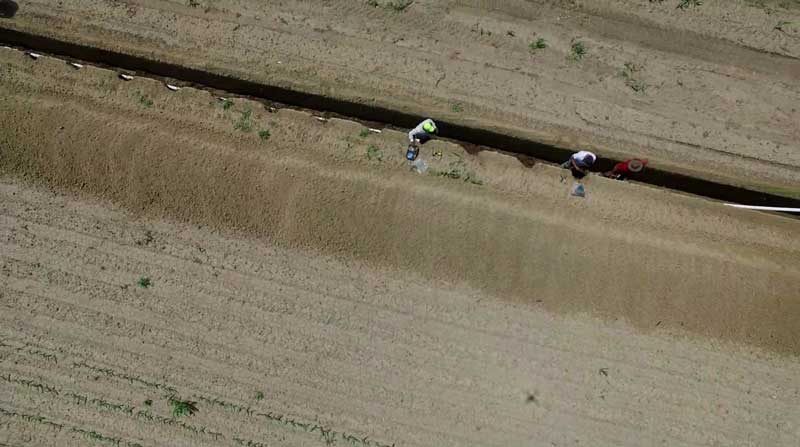
The field is first cleared and leveled. GPS-guided trenching equipment is then used to dig precise pathways for the PVC mainlines and manifolds, ensuring accurate depth and slope.
Laying drip lines
Tractor-mounted injection implements slice through the soil to lay the drip lines at a specific depth, usually between 12 and 16 inches below the surface. These lateral lines are then carefully connected to the supply manifolds.
Installing filtration and pressure regulation
The filter station is assembled near the water source. This central hub houses the primary filtration units, pressure regulators, and fertigation injection equipment.
Connecting the water source
The mainlines are tied into your well or pump station. Electrical connections for automation controllers and sensors are also finalized during this stage.
System testing and commissioning
Before the trenches are completely backfilled, the system is pressurized. We flush the lines to remove dirt and thoroughly check every connection for leaks or pressure drops.
Initial irrigation best practices
Once the system is live, we help you establish a baseline watering schedule. Proper initial irrigation encourages deep root growth, setting your corn crop up for a strong, healthy season.
Advantages of SDI for Corn Production
Investing in an underground system provides several distinct agronomic and financial benefits.
Water efficiency and conservation
SDI applies water directly to the root zone, reducing overall water usage by up to 30 percent compared to traditional center pivots or flood irrigation.
Improved nutrient delivery
By injecting liquid fertilizer directly into the irrigation water (fertigation), nutrients are delivered right to the active root system. This prevents nutrient leaching and maximizes fertilizer efficiency.
Enhanced corn yield and quality
Consistent moisture and precise nutrition eliminate plant stress. Corn grown with SDI consistently shows higher test weights, better ear development, and significant yield bumps.
Reduced disease pressure and weed growth
Because the soil surface remains completely dry, weed seeds struggle to germinate. A dry canopy also dramatically reduces the risk of fungal diseases that thrive in damp, humid conditions.
Labor savings
Automated controllers and remote monitoring reduce the physical labor required to manage irrigation. You spend less time moving pipes or repairing pivot gearboxes, freeing you up to focus on other farm management tasks.
Management and Maintenance of Your SDI System
Preventative maintenance is the key to protecting your investment. A well-maintained system will operate flawlessly for decades.
Flushing and cleaning protocols
Lateral lines must be flushed periodically to remove accumulated silt and organic matter. We recommend a regular schedule of chemical treatments, such as minor acid or chlorine injections, to prevent mineral scale and biological clogging inside the emitters.
Troubleshooting common issues
If pressure drops or flow rates change unexpectedly, it may indicate a clogged filter or a subsurface leak. Regular monitoring helps you identify and isolate these issues before they impact crop health.
Seasonal maintenance and winterization
In freezing climates, systems must be properly winterized. This involves using compressed air to blow out all remaining water from the manifolds, valves, and filter stations to prevent cracked pipes.
Monitoring plant health
Pay close attention to crop uniformity. Aerial imagery or simple field scouting will quickly reveal if a specific zone is receiving too much or too little water.
Western Irrigation’s support
You do not have to manage your system alone. Western Irrigation offers comprehensive maintenance plans, routine inspections, and rapid repair services to keep your farm running smoothly.
Cost-Benefit Analysis of SDI for Corn
Understanding the financial implications is critical before breaking ground.
Initial investment costs
SDI requires a significant upfront investment. Costs include the heavy-wall tubing, PVC piping, specialized filtration equipment, and the labor required for GPS-guided installation.
Long-term operational savings
The high initial cost is offset by immediate operational savings. You will use less water, lower your pumping energy costs, and maximize the efficiency of your expensive liquid fertilizers.
Return on investment (ROI)
Most growers see a full return on their investment within three to five growing seasons. The combination of reduced input costs and consistently higher bushel yields makes SDI a highly profitable long-term strategy.
Why Choose Western Irrigation for Your Corn SDI Needs
Your irrigation partner matters just as much as the equipment you choose.
Commitment to sustainable agriculture
We believe in protecting the land for future generations. Our systems are specifically designed to maximize your profitability while aggressively conserving local water tables.
Expertise in customized solutions
There is no such thing as a one-size-fits-all farm. Our agronomy and engineering teams work closely with you to design a system that fits your exact soil profile, water availability, and yield goals.
Comprehensive product range
We partner with the industry’s leading manufacturers to supply cutting-edge emitters, commercial-grade filters, and highly accurate telemetry systems.
Unparalleled customer support
From the initial field survey to post-harvest winterization, Western Irrigation is by your side. Our dedicated field technicians are always just a phone call away.
Securing Your Farm’s Future
Subsurface Drip Irrigation is transforming how we grow corn. By taking control of your water and nutrient delivery, you eliminate the guesswork of unpredictable weather and create the ideal environment for high-yielding crops. It is a powerful step toward a more efficient, profitable, and sustainable agricultural operation.
Do not leave your next harvest to chance. Contact Western Irrigation today for a personalized consultation, and let us help you design an irrigation system that will serve your farm for decades to come.