When Does Subsurface Drip Irrigation Make Financial Sense?
When Does Subsurface Drip Irrigation Make Financial Sense?
Water scarcity and rising utility costs are putting unprecedented pressure on modern agriculture. Farmers constantly look for ways to maximize crop yields while keeping a tight lid on operational expenses. Pumping water across vast acres using traditional methods often leads to significant evaporation and runoff, burning through profits and valuable resources.
Subsurface Drip Irrigation (SDI) has emerged as a highly effective alternative to conventional overhead or flood irrigation. By delivering water and nutrients directly to the root zone beneath the soil surface, this method drastically reduces waste. However, installing these systems requires a meaningful upfront capital investment, leading many growers to question if the math actually works in their favor.
SDI offers significant financial benefits for specific agricultural contexts. Understanding the balance between initial installation costs and long-term operational savings is key to determining its viability for your fields. This post will explore exactly when this technology makes the most economic sense, referencing the expertise of Western Irrigation to help you make an informed decision.
Understanding Subsurface Drip Irrigation
What is SDI?
Subsurface Drip Irrigation involves burying a network of drip tape or tubing below the soil surface. Unlike overhead pivots or surface drip lines, SDI delivers water directly to the plant’s root zone. A system of pumps, filters, and valves controls the precise flow of water, ensuring crops receive exactly what they need without saturating the topsoil.
Key advantages of SDI
This targeted approach offers several distinct advantages over traditional methods:
Water efficiency: Delivering moisture underground virtually eliminates evaporation and surface runoff.
Nutrient efficiency: Farmers can inject liquid fertilizers directly into the irrigation lines (fertigation), placing nutrients exactly where roots can absorb them.
Reduced weed growth: Because the soil surface remains dry, weed seeds struggle to germinate.
Minimized disease pressure: Keeping plant leaves dry reduces the risk of fungal infections and moisture-related plant diseases.
Operational benefits: Farm machinery can access the field at any time without causing soil compaction or getting stuck in mud, and labor requirements for moving pipes or maintaining pivots are eliminated.
Initial Investment: The Upfront Cost of SDI
Components of an SDI System
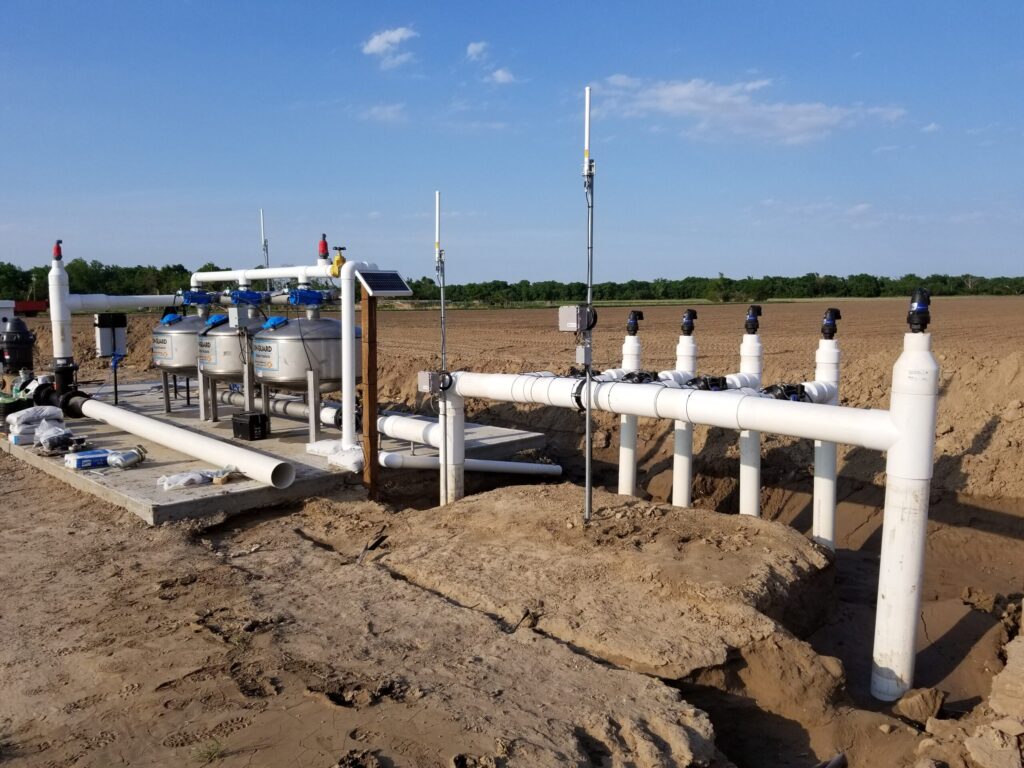
Understanding the financial equation starts with the initial investment. An SDI system is a complex network of carefully engineered components. The primary elements include miles of polyethylene drip lines (often called drip tape), high-capacity water filters, air vents, pressure-regulating valves, automated controllers, and the main water pumps.
Factors Influencing Installation Costs
The price tag for installing these components varies widely based on several site-specific factors. Field size and topography play a major role. While SDI adapts well to odd-shaped fields, highly undulating terrain requires more complex pressure regulation.
Crop type and row spacing also dictate costs. Crops planted in tight, narrow rows require more lateral drip lines per acre, pushing the material and installation costs higher. Wide-row crops or orchards need less tape, lowering the per-acre expense.
Water source and quality are critical factors. Pumping water from a deep well or a sediment-heavy surface source requires robust, expensive filtration systems to prevent the underground emitters from clogging. Additionally, the level of automation you desire—from simple timers to advanced soil-moisture sensors integrated with smartphone apps—will impact the final bill.
Western Irrigation’s Role in System Design
Proper engineering is the most important factor in a successful SDI installation. Western Irrigation specializes in assessing these exact variables. Their team evaluates your soil type, water quality, and crop goals to design a system that balances upfront costs with maximum long-term efficiency. Proper design ensures the system operates at peak performance, protecting your investment from day one.
Operational Savings: Where SDI Shines Financially
The high initial cost of SDI is offset by substantial operational savings accumulated over the system’s lifespan.
Water Savings
The most immediate financial return on an SDI system comes from reduced water consumption. Depending on the previous irrigation method and soil type, farms converting to SDI often see water usage drop by 25% to 50%. For operations paying high rates for municipal or district water, or those strictly limited by local water rights, this reduction directly translates to massive savings on utility bills and ensures compliance with water allocations.
Energy Savings
Pumping water requires energy, and energy is expensive. Traditional center pivots and big gun sprinklers require high water pressure to operate effectively. SDI systems, on the other hand, operate at very low pressures. Lower pressure means the irrigation pumps do not have to work as hard, resulting in significant reductions in electricity or diesel consumption.
Labor Savings
Managing traditional irrigation is notoriously labor-intensive. Moving pipes, clearing clogged nozzles on pivots, or managing flood gates takes time away from other critical farm operations. SDI systems are highly automated. Once programmed, they require minimal daily management, freeing up farm labor for higher-value tasks and reducing seasonal payroll expenses.
Fertilizer Savings
Fertilizer is one of the largest input costs for any farm. Traditional broadcast applications are inefficient, with nutrients often washing away or leaching below the root zone before the plant can use them. Fertigation through an SDI system spoon-feeds the exact amount of nitrogen, phosphorus, and potassium the crop needs at specific growth stages. This precision cuts down total fertilizer usage by up to 30% while maintaining or improving plant health.
Increased Yields and Crop Quality
Consistent, stress-free hydration leads to better crops. Plants that never experience severe drought stress or waterlogging grow more vigorously. subsurface drip irrigation ensures a constant, optimal moisture level in the root zone. This translates directly into higher overall yields and better crop quality, which often commands premium prices at the market.
Reduced Chemical Use
As mentioned earlier, dry topsoil means fewer weeds, and a dry plant canopy means less fungal disease. Consequently, farmers utilizing SDI consistently spend less money on herbicides, fungicides, and the fuel and labor required to apply them.
When SDI Makes Financial Sense: Key Scenarios and Considerations
High-Value Crops
Berries, vegetables, orchards, and vineyards offer a high margin per acre. Even a slight increase in yield or crop quality from SDI can rapidly pay for the system.
Water and Energy-Scarce Regions
In areas with high water costs, strict usage restrictions, or exorbitant electricity rates, the efficiency of SDI transforms from a luxury into a necessity. Reducing pumping costs and maximizing every drop of water becomes the primary driver of profitability.
Irregular Topography and Soil Types
Fields with awkward shapes or steep slopes are notoriously difficult to irrigate with center pivots. SDI adapts perfectly to irregular boundaries and varied terrain. Additionally, highly permeable sandy soils benefit immensely from SDI, as it prevents water from rapidly leaching past the root zone before the plant can use it.
Long-Term Investments
Perennial crops like tree nuts or alfalfa allow an SDI system to remain undisturbed for many years, maximizing the lifespan of the buried tape and improving the long-term ROI.
Potential Downsides and Mitigation Strategies
Clogging
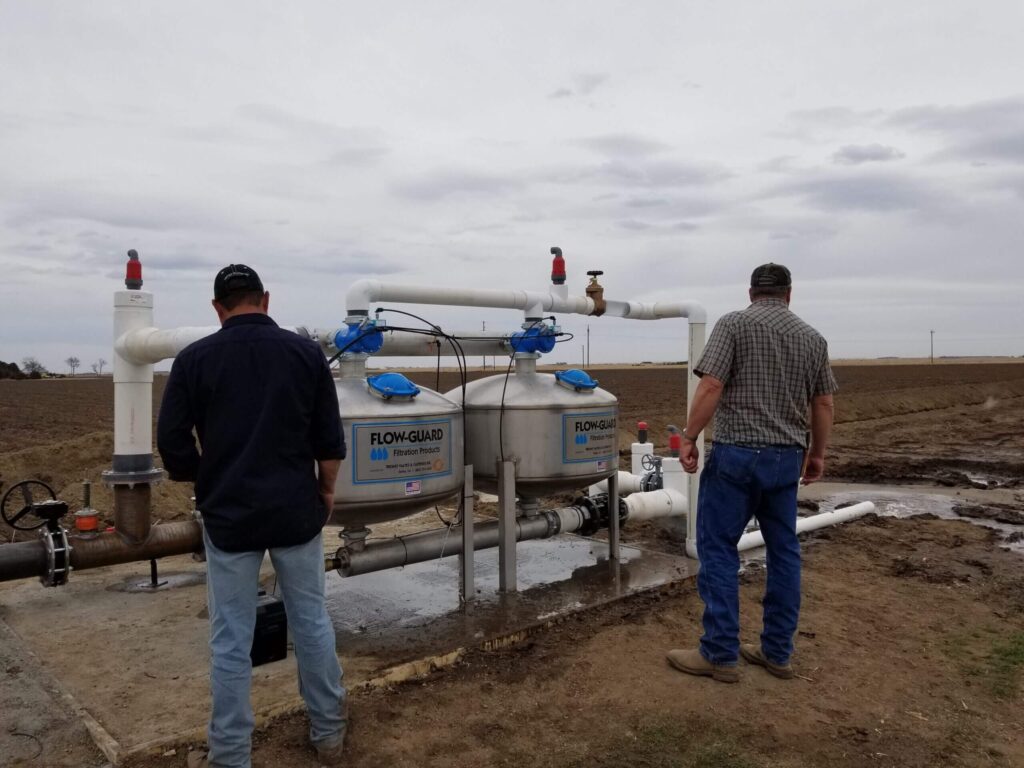
The most significant risk to an SDI system is emitter clogging. Sediment, biological growth (like algae), and chemical precipitates can block the tiny underground holes, starving the crop of water. Mitigation requires exceptional filtration systems tailored to the specific water source. Furthermore, routine maintenance, including flushing the lines and injecting mild acids or chlorine to break down buildup, is essential. Western Irrigation provides comprehensive service plans to ensure your filtration and maintenance schedules keep the system running flawlessly.
Rodent Damage
Gophers, mice, and other rodents sometimes chew on buried drip tape. This can cause severe underground leaks. Farmers mitigate this by maintaining active pest control programs, managing field borders to reduce rodent habitats, and sometimes injecting specific repellents through the drip lines.
Initial Cost and Financing
The high initial capital requirement remains the biggest barrier to entry. To mitigate this, many farms work with agricultural lenders who understand the long-term value of SDI. Financing the system over a 7- to 10-year period allows the annual operational savings to cover the loan payments, essentially making the system pay for itself over time.
System Longevity
A well-maintained SDI system can last 15 to 25 years. However, neglect can ruin a system in just a few seasons. Following strict maintenance protocols and winterization procedures is mandatory to protect the investment and ensure the expected lifespan is achieved.
Partnering with Western Irrigation for Your SDI Solution
Designing a highly efficient subsurface system requires specialized engineering and local agronomic knowledge. As a premier provider of irrigation services near Nebraska, USA, Western Irrigation delivers the expertise needed to make SDI a profitable reality for your operation.
From analyzing your soil type and water quality to selecting the right emitters and automation technology, they provide customized solutions tailored to your specific farm size and crop rotation. Their ongoing support ensures your system runs efficiently year after year, protecting your investment.
Securing Your Farm’s Financial Future
Subsurface Drip Irrigation is a serious investment, but the math is clear for many agricultural operations. By drastically reducing water, energy, fertilizer, and labor costs while simultaneously boosting crop yields, SDI transforms irrigation from a sunk cost into a driver of profitability. When applied to high-value crops, tricky terrains, or regions facing high input costs, the financial returns are highly compelling.
If you are tired of watching profits evaporate and want to take absolute control over your farm’s water and nutrient management, it is time to explore your options. Contact the experts at Western Irrigation today to schedule a site evaluation and discover how an SDI system can improve your bottom line.