Soybean Irrigation Management: Balancing Water Use and Plant Health
Soybean Irrigation Management: Balancing Water Use and Plant Health
Soybeans are more than just a crop; they are a global staple, a vital protein source, and a cornerstone of the agricultural economy. For growers, the journey from planting to harvest is fraught with variables, but perhaps none is as critical as water. Water is the lifeblood of soybean cultivation, directly influencing both the quantity and the quality of the final yield.
However, water management isn’t as simple as turning on a tap. It requires a delicate balance. Too little water, and the plants stunt; too much, and disease sets in. This is where precision becomes paramount. At Western Irrigation, we understand that mastering this balance is the key to a profitable harvest. We specialize in providing professional soybean irrigation sales and installation to help growers take control of their water usage, ensuring every drop contributes to plant health and yield potential.
The Challenges of Rainfall Dependency
For generations, many farmers relied on the “wait and see” approach to watering, hoping that seasonal rainfall would be sufficient to carry the crop through to harvest. However, relying solely on precipitation is increasingly becoming a high-stakes gamble. Weather patterns have become more erratic, with rainfall events often being too intense to soak in effectively or too sparse to support crop needs during critical growth stages.
Rainfall inconsistency poses a severe threat to soybean development. A heavy storm early in the season might provide ample moisture, but if it is followed by a four-week drought during the reproductive stages, the yield potential can plummet. Furthermore, rain does not fall uniformly across a field. Soil variability and topography mean that relying on rain often leaves some acres waterlogged while others parch.
Supplemental irrigation is no longer a luxury for high-yield soybean production; it is a necessity for risk management. By integrating a reliable irrigation system, growers can smooth out the valleys in rainfall data, ensuring that the crop receives a consistent supply of moisture regardless of what the clouds decide to do. This stability allows for better planning, more accurate yield forecasting, and ultimately, a more secure bottom line.
The Risks of Over-Irrigation and Under-Irrigation
Effective irrigation is not about volume; it’s about timing and precision. Swinging too far in either direction can be detrimental.
The Cost of Over-Irrigation
It might seem counterintuitive, but you can “drown” a soybean crop. Excess water saturates the soil, pushing out the oxygen that roots need to survive. This anaerobic environment invites root rot and other fungal diseases. Furthermore, over-irrigation leads to nutrient leaching. Vital nutrients like nitrogen are washed away below the root zone before the plant can absorb them, wasting money on fertilizer and potentially contaminating groundwater.
The Danger of Under-Irrigation
On the flip side, water stress stunts growth. If a soybean plant lacks water during vegetative stages, it simply won’t build the canopy needed to support a heavy pod load. If stress occurs during the reproductive stages—flowering and pod fill—the plant will abort flowers or produce small, shriveled seeds. The result is a direct hit to the bottom line.
This underscores the need for precision irrigation. The goal is to keep soil moisture in the “Goldilocks zone”—not too wet, not too dry, but just right for the plant’s current metabolic needs.
Understanding Soybean Water Needs
To manage water effectively, one must understand the soybean’s lifecycle. A soybean plant’s thirst changes dramatically as it matures.
- Germination and Seedling: Water needs are relatively low. The focus here is on establishing a stand.
- Vegetative Growth: Demand increases as the plant builds biomass. However, some mild stress here can actually encourage deeper root growth.
- Flowering (R1-R2): This is a transition point. Water usage ramps up significantly.
- Pod Development and Fill (R3-R6): This is the critical window. Soybeans are most sensitive to moisture stress during pod fill. The plant needs substantial water to fill the seeds. A lack of moisture here causes the most significant yield penalties.
Environmental factors complicate this timeline. Sandy soils hold less water and require more frequent, smaller irrigation events compared to clay loams. High temperatures and wind speed increase evapotranspiration rates, meaning the plant loses water faster and needs replenishment sooner.
The Role of Technology in Precision Irrigation
The days of manually opening floodgates or guessing pivot speeds are fading. Modern agriculture is driven by technology that enhances efficiency and precision. Western Irrigation specializes in these advanced systems, helping growers transition from estimation to exact execution.
Subsurface Drip Irrigation (SDI)
One of the most efficient technologies available is Subsurface Drip Irrigation. SDI involves burying drip tapes below the soil surface, directly in the root zone.
- Efficiency: Because water is applied underground, there is zero evaporation loss from the soil surface and no wind drift.
- Root Health: Water is delivered exactly where the roots are, keeping the surface dry. This significantly reduces humidity within the crop canopy, lowering the risk of fungal diseases like White Mold.
- Fertigation: SDI allows for the precise injection of nutrients directly to the roots, maximizing fertilizer efficiency.
Center Pivot Efficiency Packages
For those using center pivots, technology has evolved to include low-pressure drop nozzles and variable rate irrigation (VRI). VRI allows the pivot to change speed or turn specific sprinklers on and off based on a prescription map. This means a grower can apply less water to low-lying wet spots and more to sandy ridges, ensuring uniform growth across a variable field.
Western Irrigation offers comprehensive sales and installation of these systems. We assess field topography and soil composition to recommend the technology that yields the highest return on investment for the specific acreage.
Monitoring Environmental Conditions for Better Irrigation
Hardware is only half the battle; data is the other. To irrigate effectively, you need to know what’s happening below the soil surface.
- Soil Moisture Sensors: These devices act as a fuel gauge for your soil. They tell you exactly how much water is available to the roots at various depths. This prevents the “guesswork” of watering based on how dry the surface looks.
- Weather Stations: Localized weather data helps predict crop water use (evapotranspiration). Knowing that a heatwave is approaching allows growers to pre-water and prevent stress before it happens.
- Crop Monitoring Tools: Aerial imagery and plant sensors can detect stress signals before they are visible to the naked eye.
By integrating these monitoring tools with Western Irrigation’s systems, growers can make informed decisions. Instead of watering on a schedule, you water based on the plant’s actual needs.
Benefits of Partnering with Western Irrigation
Irrigation is a significant capital investment. To ensure that this investment pays dividends for decades, it is crucial to partner with professionals who understand both the hardware and the agronomy.
Western Irrigation is more than just a vendor; we are partners in production. Our commitment extends beyond the sale.
- Custom Design: No two fields are alike. We design systems tailored to your specific topography, water source capacity, and crop rotation.
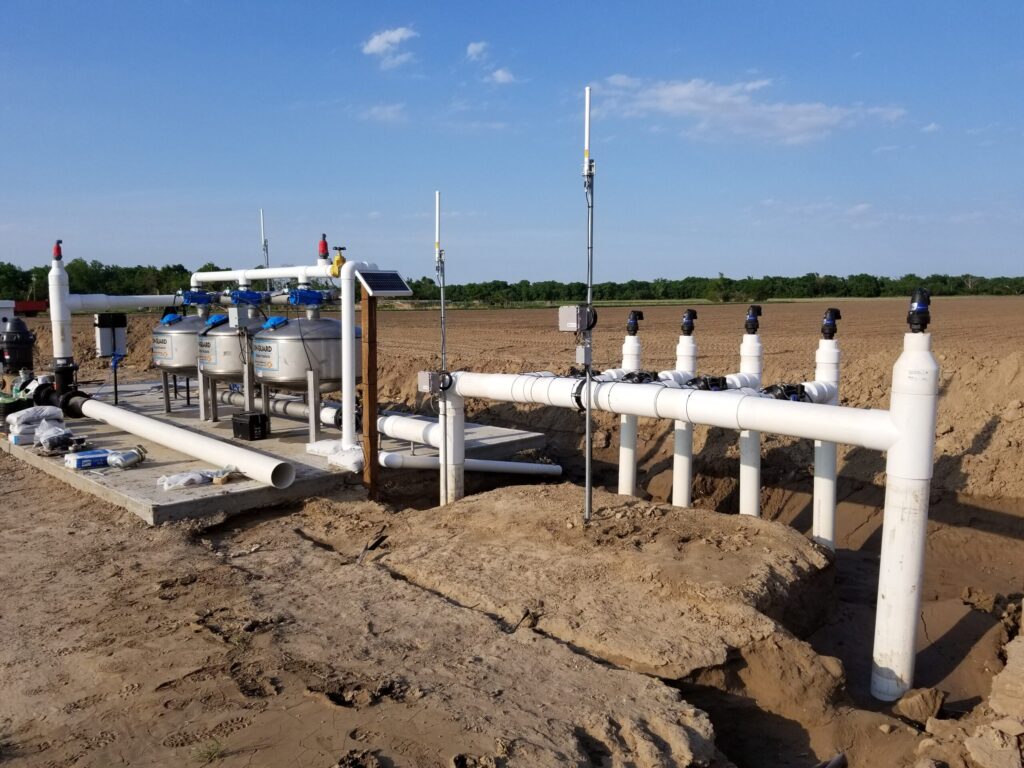
- Quality Installation: A system is only as good as its installation. Our experienced crews ensure that pumps, pipes, and control panels are installed correctly to prevent costly downtime during the peak growing season.
- Ongoing Support: Irrigation systems require maintenance. We provide the service and parts needed to keep the system running at peak efficiency year after year.
By working with Western Irrigation, growers gain access to expertise that helps them navigate the complexities of modern water management.
Maximize Your Yields with Smarter Irrigation
Balancing water use and plant health is the tightrope walk of soybean cultivation. It requires a deep understanding of the crop, a respect for the environment, and the right tools to bridge the gap between the two. By moving away from rainfall dependency and embracing precision irrigation, growers can protect their yields against drought, disease, and waste.
Don’t leave your harvest to chance. Investing in a professional irrigation system is investing in the certainty of your operation.
Ready to optimize your water usage and boost your soybean yields? Contact Western Irrigation today. Our experts are ready to discuss your unique needs, offering professional advice, system sales, and top-tier installation services to help you grow better.